Microsoft’s Majorana 2 quantum chip arrived this week, with qubits 1,000 times more reliable than those of the first generation models, a mean qubit lifetime of 20 seconds against an industry norm measured in microseconds, and a revised roadmap targeting a commercially scalable quantum computer by 2029. Behind those figures is Microsoft Discovery, the company’s agentic Artificial Intelligence platform for scientific research and development, which reached general availability alongside the chip announcement.
Most quantum chips today can hold their fragile computational state for a fraction of a second before losing it. Majorana 2 holds it for up to a minute. Microsoft’s analogy is a phone battery that, instead of dying in a day, lasts nearly three years on a single charge. The chip is also being used as evidence that Microsoft Discovery can support complex scientific workflows, though the most important materials change, switching the superconducting material from aluminium to lead, came from years of conventional materials research rather than a direct Artificial Intelligence recommendation.
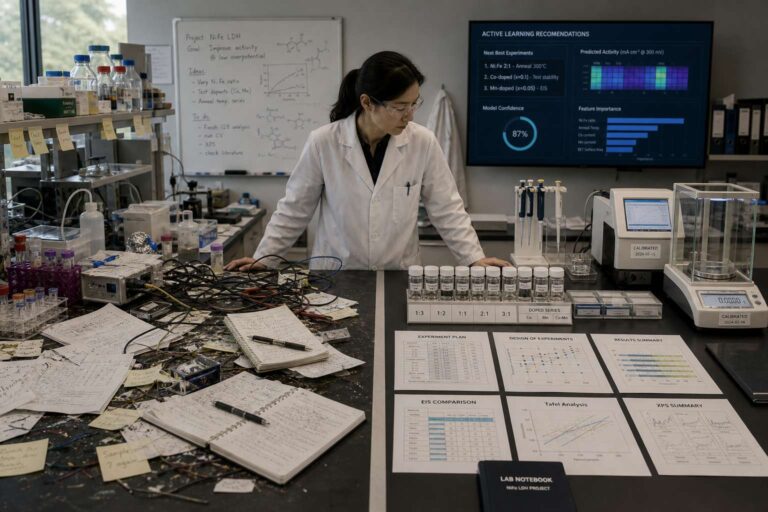
Microsoft Discovery’s agents worked around that breakthrough by managing fabrication workflows, automating measurements that previously took weeks each, breaking down nearly two decades of siloed research data, and surfacing correlations across large volumes and varieties of information. Zulfi Alam, corporate vice president for quantum at Microsoft, said Artificial Intelligence agents can resynthesize data and make correlations that humans cannot see because no single individual has that much vision in that much data.
One concrete result involved qubit measurement, the process of detecting quantum states by determining whether there’s an even or odd number of billions of electrons on a semiconductor wire. When done manually, this takes weeks. Built on Microsoft Discovery, the team have been building three-dimensional maps of qubit conditions, with the agent handling parallel voltage adjustments in hundreds of parameters simultaneously.
Microsoft Discovery combines specialised Artificial Intelligence agents for scientific research, a Discovery Engine for research and reasoning workflows, and enterprise-level security and governance. A free Microsoft Discovery app, usable locally with a GitHub Copilot account, is also in early preview. Microsoft’s revised quantum timeline, moving from 2033 to 2029, was based on Majorana 2’s progress, which is an acceleration, but quantum roadmaps have a history of optimistic compression. The 1,000x reliability figure refers specifically to improvements over Majorana 1’s qubits, not a direct benchmark against competing approaches from IBM or Google, which use fundamentally different architectures.