
Epium builds AI-driven tools for Amazon sellers. Every one of them ran on our own account, with our own money, before anyone else saw it.
Built by humans, refined by AI.
What we make
Platform
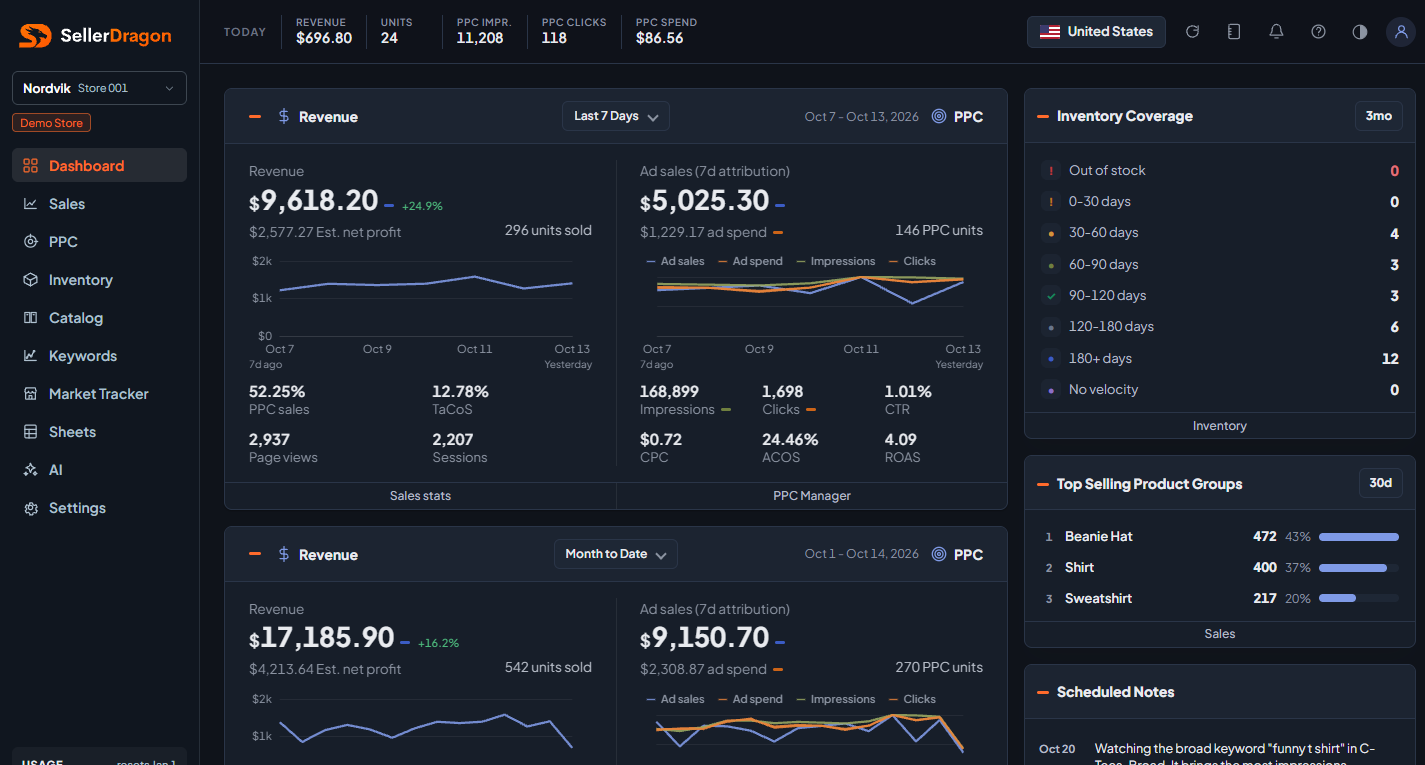
Your whole Amazon business in one live view, and the tools to act on it.
Service
A fixed-price Amazon account audit, run through SellerDragon on your real data. No calls, no pitch.
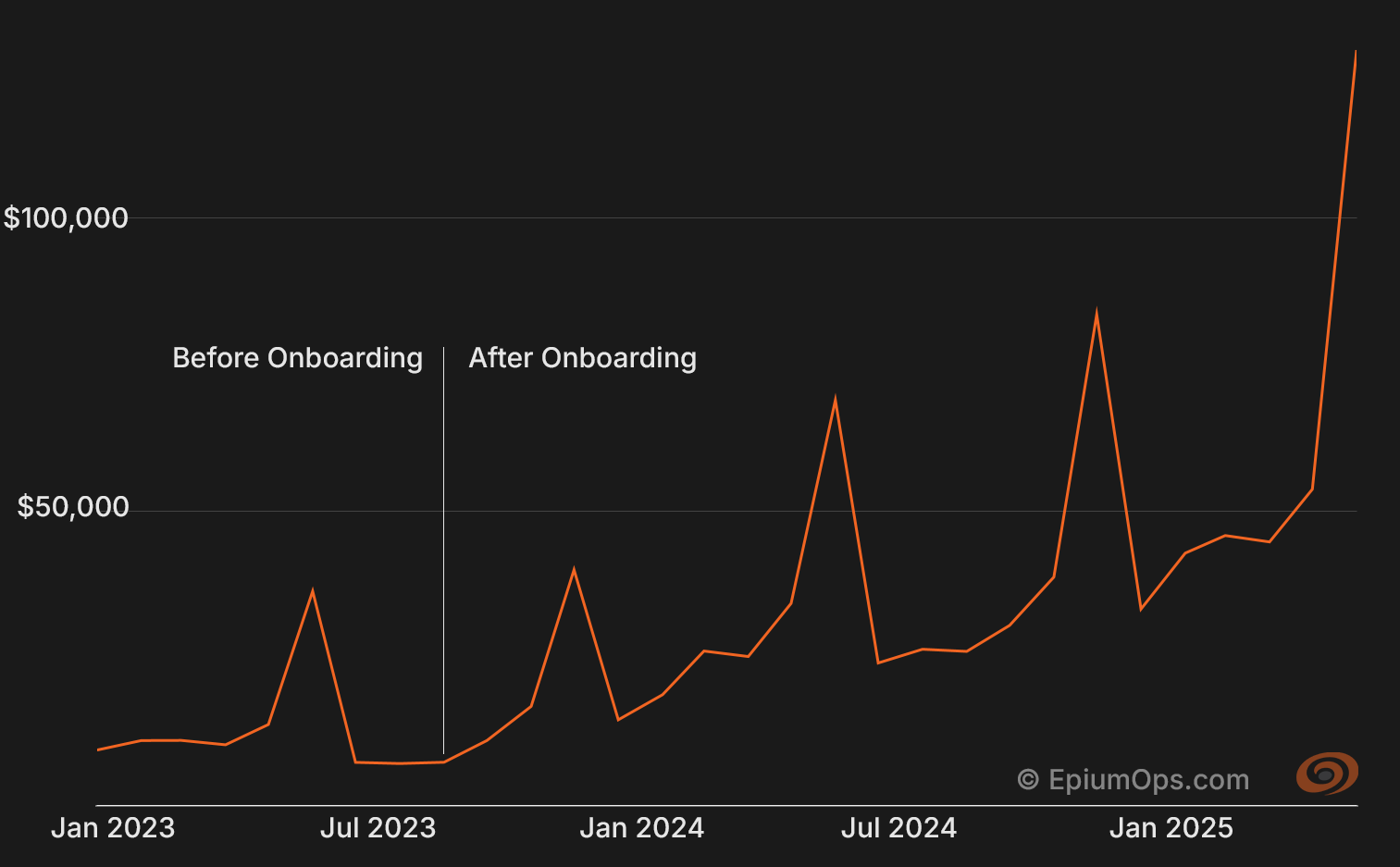
$180k → $750k a year in 18 months for one managed brand.

Experiment
An AI news site that runs itself. It finds the stories, writes them and publishes, every day, with nobody in the loop.
Talking about autonomous AI is cheap. Running one in public, where anyone can judge it, is the honest version.
And our own Amazon account selling in the US, UK and EU since 2018. It’s where all of the above gets tested first.
What we believe
Dashboards tell you what already happened. We build tools that propose the next move – a bid, a reorder, a rewrite – and carry it out once you say yes.
AI reads every search term and drafts every change. A person decides what good looks like, and nothing touches a live account without approval.
If it hasn’t survived on our own account, with our own money at stake, it doesn’t ship.
How we got here
Epium was founded by Christian Holmgreen, who has worked with artificial intelligence since the mid-90s, when he built neural networks to detect credit-card fraud for Visa and Mastercard. He holds a Master’s in Computer Science (AI) with a background in psychology; systems on one side, buyer intent on the other.
After 25 years in tech and business he started selling on Amazon, found the tooling wanting, and started building his own. It took two attempts.
Mid-1990s
Neural networks catching card fraud for Visa/Mastercard – AI before it was a buzzword.
2018
Started selling on Amazon in the US, UK and EU.
2024
Ran our account from control panels in Google Sheets™, fed by a third-party data connector, the only one available at the time. That connector worked, but it was painfully slow and frustrating to live with. That frustration is why SellerDragon exists.
Late 2024
First attempt at a real platform. Over-engineered, too abstract, scrapped. Lesson kept.
November 2025
Started again – deliberately small, as “just a Sheets project”.
2026
AI models got good enough that development could be seriously accelerated. The small project became SellerDragon, and the audits on EpiumScale run on it.
Longer pieces on where AI is actually going. The ideas and arguments are Christian’s; the drafting is AI-assisted – which is rather the point. Amazon-specific writing lives on SellerDragon Insights →

Recursive self-improvement sounds simple: an AGI makes itself smarter, then repeats the process faster. But if the system grades its own successor, it may only confirm improvements against the rubric it already chose. That is recursive self-approval, not progress toward ASI.
Questions about the platform, an audit, or a custom Amazon or AI build? Get in touch.