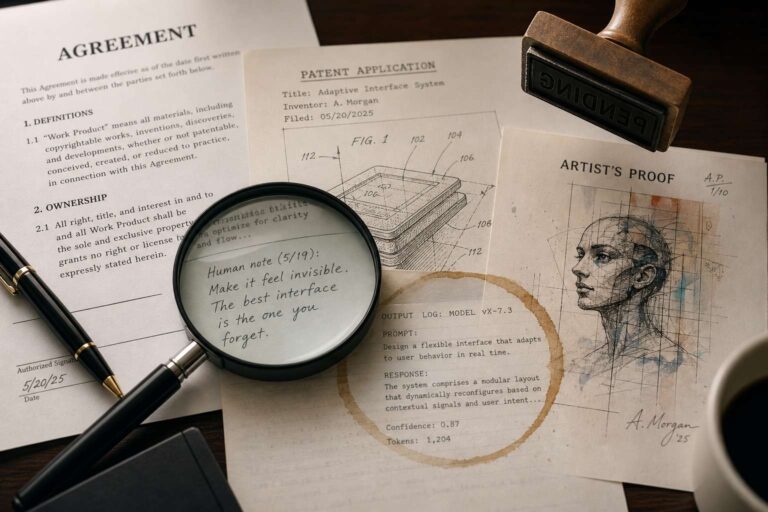
Artificial Intelligence is forcing intellectual property law to move beyond traditional assumptions about human authorship, inventorship, and ownership. New Jersey lawyers say businesses are increasingly using these tools in daily operations, creating both efficiency gains and new legal exposure. Patent searches, drafting, trademark monitoring, and infringement detection can be streamlined, but unresolved questions remain around copyright protection, inventorship, confidentiality, and privileged information.
Kevin M. Kocun of Lerner David LLP said clients and prospective clients are relying more heavily on Artificial Intelligence, including in communications and work product. He expects innovation to benefit from easier development of inventions, designs, and coding, while also increasing demand for intellectual property protection. His firm is evaluating general-purpose Artificial Intelligence tools and tools tailored to intellectual property practice, while establishing internal committees and protocols to guide their responsible use.
Attorneys at Norris McLaughlin, P.A. emphasized that companies should understand which Artificial Intelligence tools are used to create works, designs, and marketing collateral. Nicholas A. Duston said courts are confronting novel copyright ownership issues, while contracts will need clearer terms governing tool use and ownership of outputs. Businesses are advised to review data sources, image rights, license status, tool terms and conditions, training practices, and whether a program claims rights to generated output.
Jonathan D. Bick of Brach Eichler LLC said Artificial Intelligence-generated algorithms raise liability and ownership issues because Artificial Intelligence is not a legal entity and cannot be treated as an author or defendant in the same way as a person. Businesses using these systems may face takedown demands, royalty obligations, or infringement claims if protected material is incorporated without consent. He also warned that placing confidential business information into an Artificial Intelligence program can undermine trade secret protections.
Artificial Intelligence is also affecting intellectual property procedure. Danielle M. DeFilippis of Norris McLaughlin, P.A. said the United States Patent and Trademark Office is testing and using Artificial Intelligence in its review process, making it important for owners to understand how these tools influence scope, timing, and results. Lawyers expect Artificial Intelligence to remain a support tool for refinement and efficiency rather than a complete replacement for professional judgment.