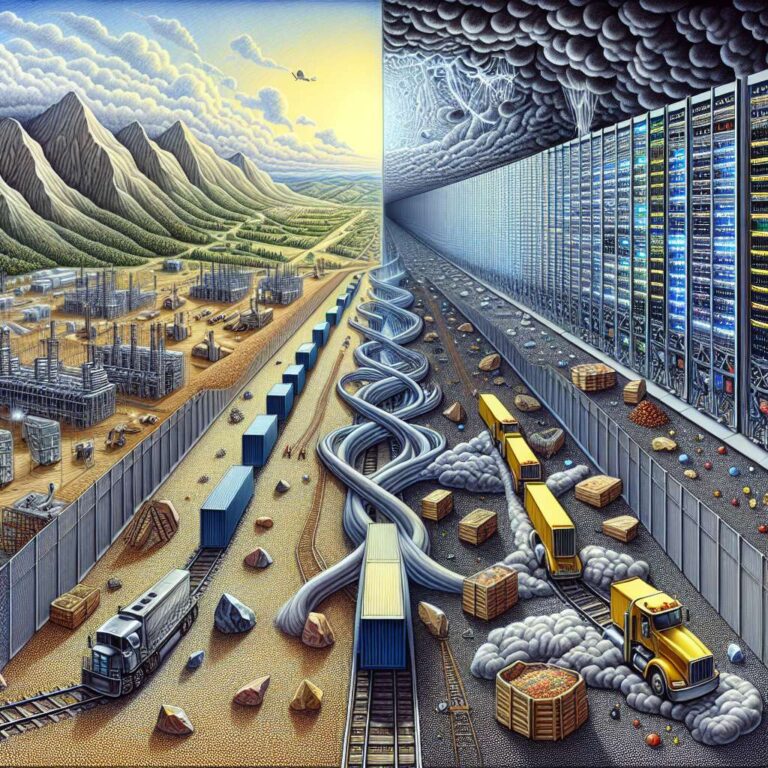
Microbial biotechnology is emerging as a promising tool to extract more metal from aging mines at a moment when demand for critical minerals is climbing sharply. In a pine forest on Michigan’s Upper Peninsula, the only active nickel mine in the US is nearing the end of its life, and nickel concentration at Eagle Mine is falling and could soon drop too low to warrant digging. As carmakers scramble for nickel for electric vehicle batteries and pressure mounts for copper and rare earth elements, traditional deposits are becoming harder and more expensive to work because the highest quality resources have already been exploited. Microbes and other biological methods could help recover metals from lower grade ores and waste, potentially extending mine lifetimes and supplying materials needed for data centers, electric cars, and renewable energy projects.
At the same time, concerns are growing that the long-predicted crisis of truth in the age of Artificial Intelligence is arriving in more subtle and pervasive ways than expected. Commentators describe a creeping “truth decay” in which Artificial Intelligence content dupes people, shapes beliefs even when users know they are encountering fabricated material, and erodes societal trust in news, institutions, and one another. A recent incident convinced one observer that the warning signs had tipped into a full-blown problem, and that many of the tools marketed as defenses against misinformation, such as fact-checking bots or automated detection systems, are failing to keep pace with the volume and sophistication of generated content. The realization underscores how quickly Artificial Intelligence systems have shifted from experimental novelties into infrastructure capable of influencing public perception at scale.
Behind this shift is a race to build hyperscale Artificial Intelligence data centers, massive complexes in farmland and industrial parks that resemble a new kind of industrial facility. These supersized buildings are packed with racks of computers and are essentially supercomputers designed to train and run large language models at mind-bending scale, equipped with specialized chips, advanced cooling systems, and in some cases dedicated energy supplies. Their extraordinary computing power enables the latest Artificial Intelligence breakthroughs, but it also comes with significant costs in energy, water, hardware, and land use, prompting scrutiny of their environmental and social impact. Elsewhere in the tech landscape, a set of notable developments highlights how tightly interconnected infrastructure, geopolitics, and Artificial Intelligence have become, from Elon Musk’s SpaceX acquiring xAI and floating an eventual IPO, to OpenAI searching for alternatives to Nvidia chips, to Ukraine’s heavy dependence on Starlink connectivity maintained by an informal network of engineers and repair experts.