Nvidia founder and CEO Jensen Huang and Dassault Systèmes CEO Pascal Daloz used the 3DEXPERIENCE World event in Houston to unveil an expanded partnership focused on industrial Artificial Intelligence rooted in physics-based world models. Huang described Artificial Intelligence as critical infrastructure, comparing it to water, electricity and the internet, and emphasized that “this is the largest collaboration our two companies have ever had in over a quarter century.” The goal is to fuse Nvidia accelerated computing and Artificial Intelligence libraries with Dassault Systèmes’ virtual twin platforms so engineers can work in software at far greater scale, with Huang saying engineers will work at a scale that is “100 times, 1,000 times – and eventually a million times greater than before.”
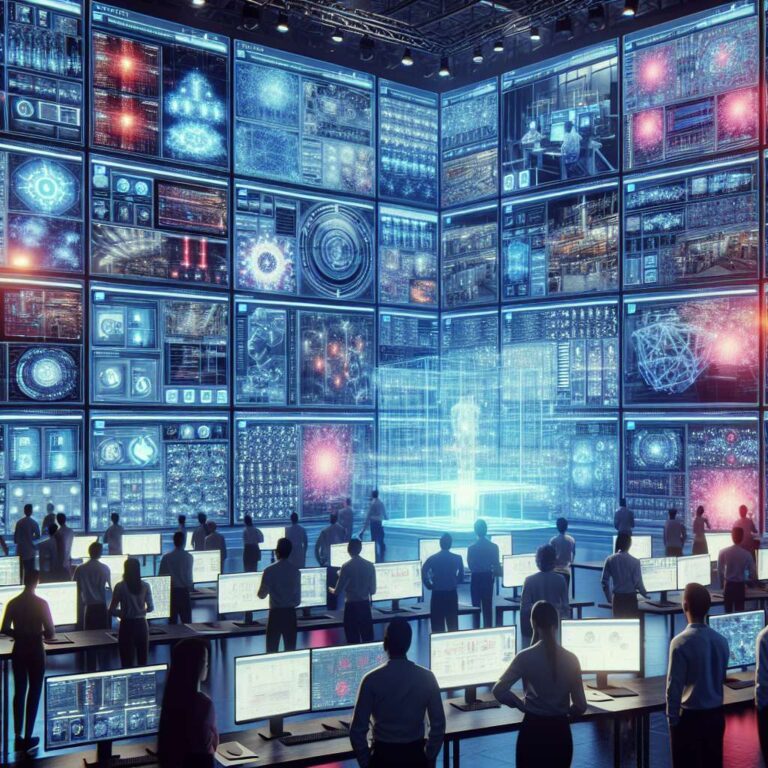
The companies are positioning virtual twins as “knowledge factories” that move decision-making upstream by allowing products, factories and biological systems to be simulated, validated and optimized before anything is built physically. Dassault Systèmes’ 3DEXPERIENCE platform serves more than 45 million users and 400,000 customers globally, giving the partnership a large installed base for deploying industry world models, which are described as science-validated Artificial Intelligence systems grounded in physics. The shared architecture is intended to let engineers design both geometry and behavior, explore much larger design spaces earlier in development and rely on trusted simulations across biology, materials science, engineering and manufacturing.
Concretely, Nvidia BioNeMo integrated with Dassault’s Biovia will accelerate discovery of new molecules and next-generation materials, while Simulia Artificial Intelligence-based virtual twin physics behavior using Nvidia CUDA-X and Artificial Intelligence physics libraries will help designers instantly predict outcomes. Nvidia Omniverse physical Artificial Intelligence libraries combined with Delmia virtual twins are meant to enable autonomous, software-defined production systems, and a 3DEXPERIENCE agentic platform will blend Nvidia Artificial Intelligence technologies and Nemotron open models with Dassault industry world models to power virtual companions that deliver contextual industrial intelligence. As factories are increasingly designed and operated as virtual twins, Dassault Systèmes is deploying Nvidia-powered Artificial Intelligence factories on three continents through its Outscale sovereign cloud so customers can run Artificial Intelligence workloads under strict data residency and security requirements. Both executives stressed that the intent is not to replace engineers but to augment them, with every designer gaining a “team of companions” and using virtual twins and 3D universes as environments to eliminate bad choices early and invent new categories of products rather than merely automate existing ones.