
Intel installs ASML Twinscan EXE:5200B High NA EUV tool for 14A node ramp

Intel Foundry has installed ASML's latest High NA EUV scanner, the Twinscan EXE:5200B, to accelerate its 14A node, marking the industry's first transition from Low NA to High NA extreme ultraviolet lithography in volume chip production.

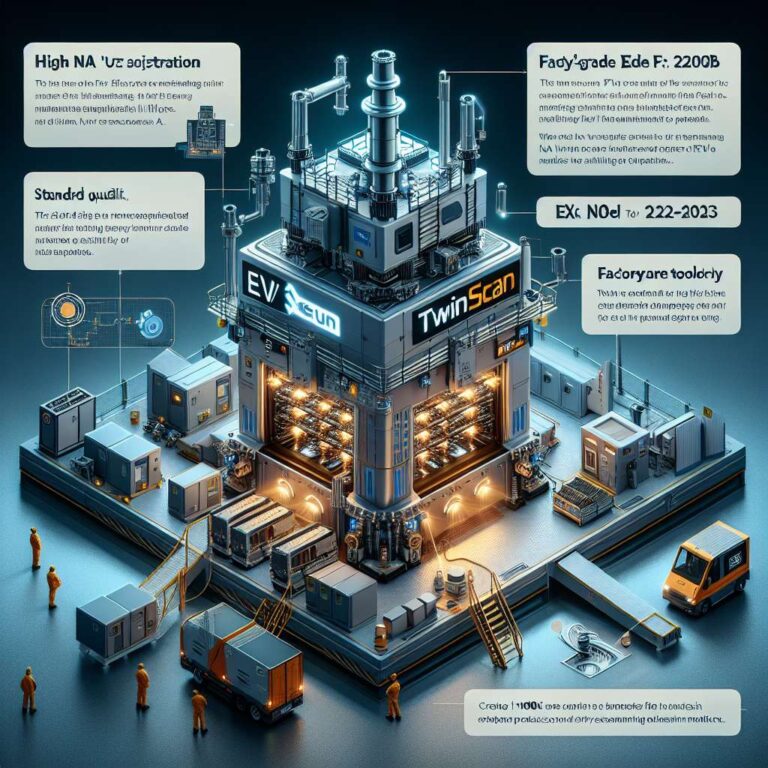
Intel Foundry has installed ASML’s TWINSCAN EXE:5200B High NA EUV scanner, which the company describes as the world’s most advanced EUV machine, to support production of its 14A node. The deployment marks what Intel calls the first industry transition from Low NA to High NA EUV lithography for a production node, following acceptance testing completed in collaboration with ASML at Intel Foundry. The EXE:5200B is ASML’s second generation of High NA EUV scanners, succeeding the earlier TWINSCAN EXE:5000 system that Intel initially used for its 14A trial runs.

Intel previously reported processing over 30,000 wafers in a single quarter, achieving simplified manufacturing by reducing the steps needed for a specific layer from 40 to fewer than 10, resulting in significantly faster cycle times. The company positions High NA EUV as a key lever for both throughput and process simplification on 14A. The new TWINSCAN EXE:5200B achieves an output of 175 wafers per hour in standard conditions, where Intel plans to tune it to over 200 wafers per hour. In parallel, the tool improves overlay precision so that distinct lithography layers can be aligned down to 0.7 nanometers, which is critical for maintaining pattern fidelity at Intel’s targeted geometries.

This latest installation builds on Intel’s High NA EUV experience that began in 2023 with the industry’s first commercial High NA tool at its Oregon research and development facility. Intel is currently shipping 14A PDK 0.5 to customers, who are reportedly very satisfied with the node’s development progress. According to Intel, the 14A node is achieving far better yield and performance parameters at its current stage of development than the 18A node did at a comparable point, reinforcing the company’s confidence in High NA EUV as it advances its foundry roadmap.
72

Impact Score

OpenAI expands ChatGPT ads with self-serve manager

OpenAI is widening its ChatGPT ads pilot with a beta self-serve Ads Manager, new bidding options and broader measurement tools. The push signals a deeper move into advertising as the company expands the program into several international markets.

OpenAI launches Artificial Intelligence deployment consulting unit

OpenAI has created a new consulting and deployment business aimed at helping enterprises build and roll out Artificial Intelligence systems. The move mirrors a similar push by Anthropic and signals a broader effort by model providers to capture more of the enterprise services market.

SK Group warns DRAM shortages could curb memory use

SK Group chairman Chey Tae-won warned that customers may reduce memory consumption through infrastructure and software optimization if DRAM suppliers fail to raise output. Demand from Artificial Intelligence data centers is keeping the market tight as memory makers weigh expansion against the long timelines for new fabs.

BitUnlocker bypasses TPM-only Windows 11 BitLocker

Intrinsec disclosed BitUnlocker, a downgrade attack that can bypass TPM-only Windows 11 BitLocker protections with physical access to a machine. The technique abuses a flaw in Windows recovery and deployment components and relies on older trusted boot code.

Contact Us

Got questions? Use the form to contact us.

Contact Form

Clicking next sends a verification code to your email. After verifying, you can enter your message.