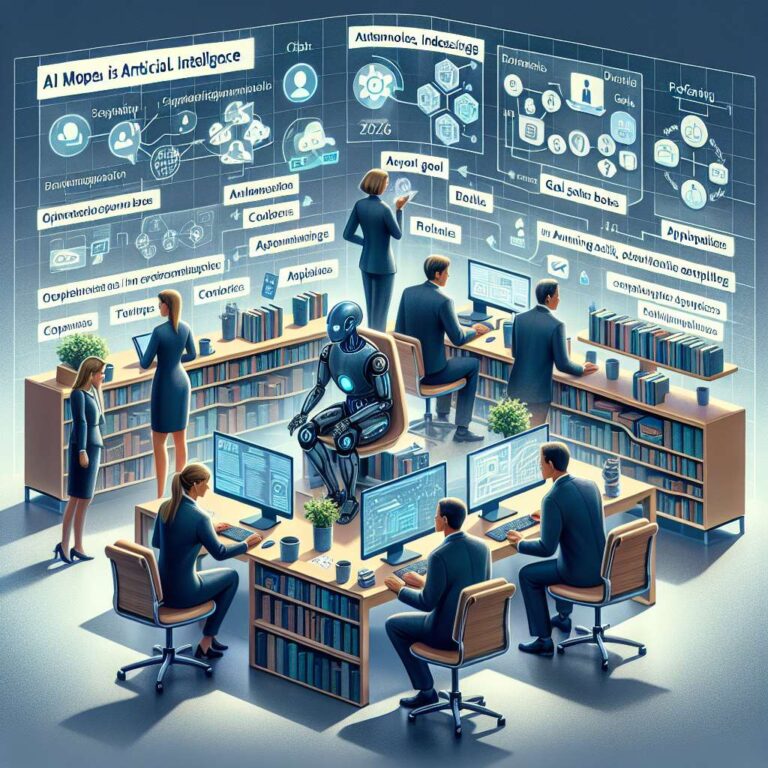
Goldman Sachs chief information officer Marco Argenti expects 2026 to be a pivotal year for artificial intelligence, with the technology moving from chat-style tools to powerful agents that can carry out complex tasks. In an interview with Fox Business, he said 2025 was a turning point in artificial intelligence’s evolution, as models shifted from simple question and answer systems to autonomous entities that can act on a user’s behalf. Argenti described a future where users set goals, similar to entering a destination into a navigation app, and artificial intelligence agents independently determine the best way to achieve those objectives.
Argenti predicts a significant expansion in artificial intelligence context handling, with models able to ingest and reason over libraries of documents, long-running conversations and a user’s entire history of reading and writing. He argues that models will increasingly function like operating systems, browsing the internet, accessing files and executing multistep workflows while giving applications access to intelligence and tools. Inside organizations, he expects adaptability to become a defining workplace skill, saying companies will favor employees with the curiosity to rethink their expertise and daily habits in response to new tools, likening the shift to the transition from no computers to computers.
On the industry level, Argenti forecasts that artificial intelligence will be a game of scale, driving large strategic alliances that create a winner-takes-most dynamic. He believes the global artificial intelligence race will increasingly be a contest between the U.S. and China, describing it as a tale of two nations with broadly comparable capabilities as the gap narrows. As enterprises move pilots into production, he warns that companies will experience a potential token sticker shock as internal artificial intelligence reasoning quietly consumes extraordinary quantities of tokens, which will push businesses to prioritize high-value use cases and token optimization at the center of their artificial intelligence strategy. Argenti also predicts the rise of agent as a service, where companies rent work from specialized artificial intelligence agents in areas like coding, finance and customer service, and he argues that energy rather than money will become the single determinant of scalability, as the consumption and production of tokens exacerbates already high power and infrastructure demands.