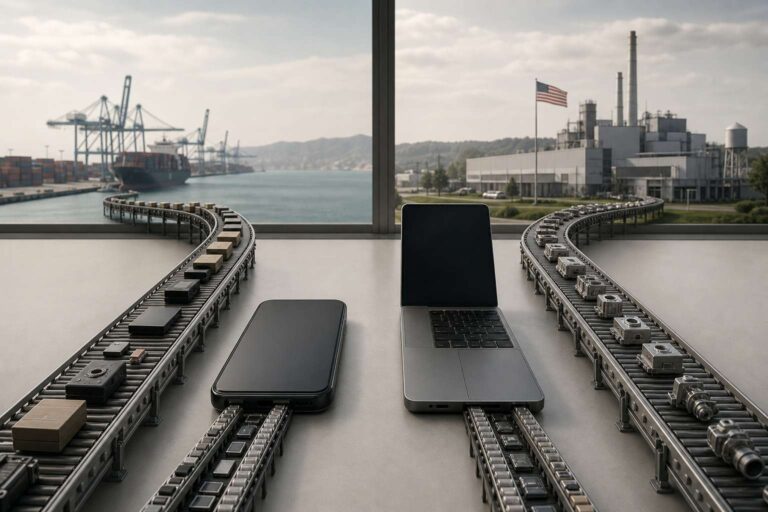
Apple has reached a preliminary agreement with Intel to manufacture some of the chips used in Apple devices, according to people familiar with the matter cited by WSJ. The arrangement remains in its early stages, and it is still unclear which Apple products will ultimately rely on Intel-made chips. The move would reduce Apple’s dependence on Asia-centered semiconductor manufacturing at a time when Artificial Intelligence demand is consuming advanced chip capacity at unprecedented levels, while giving Intel a major external endorsement for its manufacturing ambitions.
For years, Apple relied almost exclusively on Taiwan Semiconductor Manufacturing Company to produce the custom chips powering the iPhone, iPad, and Mac ecosystem. That long-running relationship helped Apple shift away from Intel-designed Mac chips in 2020 in favor of its own Arm-based silicon. But the economics of chip production have changed as explosive demand from Nvidia, cloud providers, and Artificial Intelligence startups has overwhelmed advanced semiconductor fabrication and packaging capacity worldwide. CEO Tim Cook said supply shortages involving advanced chips were constraining production of some Mac products. “We think, looking forward, that the Mac Mini and the Mac Studio may take several months to reach supply-demand balance,” Cook said during a recent earnings call.
The agreement also carries major political weight. Last summer, the administration converted nearly US? billion in federal support into Intel equity, giving the U.S. government a 10% stake in the company. Commerce Secretary Howard Lutnick reportedly met repeatedly with Apple executives, Nvidia leadership, and Elon Musk to encourage partnerships with Intel, and President Donald Trump also pressed Cook during White House discussions. Washington increasingly views semiconductor manufacturing as a national security priority as tensions with Beijing continue to reshape technology supply chains.
Intel’s manufacturing business had struggled for years after delays and setbacks allowed TSMC and Samsung Electronics to dominate advanced fabrication. That trajectory began changing after Intel appointed Lip-Bu Tan as CEO in 2025 and launched a restructuring focused on engineering, leadership, and manufacturing execution. Nvidia invested US? billion in Intel last year and partnered with the company on custom data center processors. Musk’s businesses also announced a manufacturing partnership tied to the Texas-based Terafab initiative, expected to support chip production for Tesla, SpaceX, and xAI.
TSMC still holds a strong lead in process maturity, yield consistency, and large-scale production execution, and manufacturing chips for Apple remains one of the industry’s toughest assignments. The potential partnership is therefore less about replacing TSMC than about giving Apple more optionality in a constrained and politically sensitive supply environment. It also reflects how Artificial Intelligence infrastructure spending is redrawing alliances across the technology industry and making chip manufacturing capacity as strategically important as software innovation.