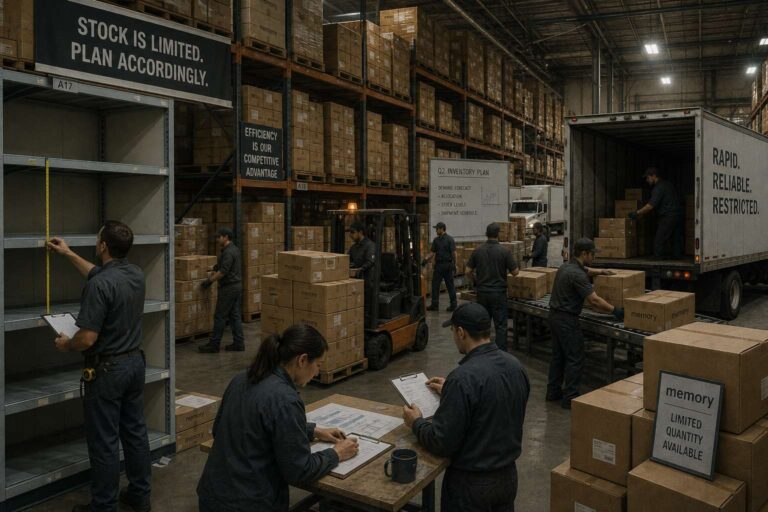
Samsung, SK hynix, and Micron are trying to balance DRAM supply with the need to expand production capacity through major orders for semiconductor manufacturing equipment. Chey Tae-won, who chairs SK Group and oversees SK hynix, warned that if suppliers do not increase memory output, customers could respond by optimizing infrastructure and software to use less memory at much lower utilization.
Current demand is being driven by hyperscalers and Artificial Intelligence accelerator makers such as AMD, NVIDIA, and others, which are securing as much memory as possible. This is tied to Artificial Intelligence data center expansion, which requires more GPU and CPU DRAM for large training runs and for model inference at massive scale. Models are now reaching tens of trillions of parameters and needing hundreds of gigabytes of system memory to host a single model for just a few users.
The result is a supply chain strain in which memory makers are selling all available DRAM months in advance while remaining cautious about large capacity increases. Suppliers were aware of rising demand years ago, but their reluctance to add manufacturing capacity is contributing to the current shortage. At the same time, they are wary because new memory fabs take years to build, and projected demand may stabilize by the time that capacity comes online.
SK hynix has ordered about 20 Low-NA EUV machines from ASML for their expansion plans, which will also support future storage production once the tools are operational. Even so, that additional capacity remains years away, leaving the market in a tight situation for a while longer.