
Copyright fears over generative AI threaten creative progress

Rising copyright anxiety around Artificial Intelligence could suppress the creative transformation artists and industries have always practiced.

Strolling through museums in Amsterdam, Boston, and Milan, the author reflects on how history’s iconic artists, including van Gogh, Dalí, and Picasso, thrived by borrowing, reinterpreting, and remixing the works of their predecessors. Van Gogh reimagined a Japanese woodblock print by Eisen, Dalí drew inspiration from Bruegel, and Picasso synthesized diverse traditions. Today, however, such intertextuality is fraught with legal peril instead of being celebrated as creativity’s lifeblood. Recent US Supreme Court and high-profile cases like the Warhol-Goldsmith and Sheeran-Townsend lawsuits highlight a legal climate skeptical of what counts as transformative—and increasingly hostile to borrowing, even as it is fundamental to art.

The rise of generative Artificial Intelligence complicates the picture. Artificial Intelligence models, trained on vast datasets of existing works, enable recombination and reinterpretation at unprecedented scale and speed. This prompts existential and legal questions: Who owns an Artificial Intelligence-generated work? The prompt writer, the model developer, or the authors whose works informed the model? With professional adoption accelerating in areas as varied as academic research and film, the landscape is rapidly evolving, outpacing regulatory bodies like the US Copyright Office, which now allows copyright for Artificial Intelligence-generated outputs so long as there is meaningful human input.

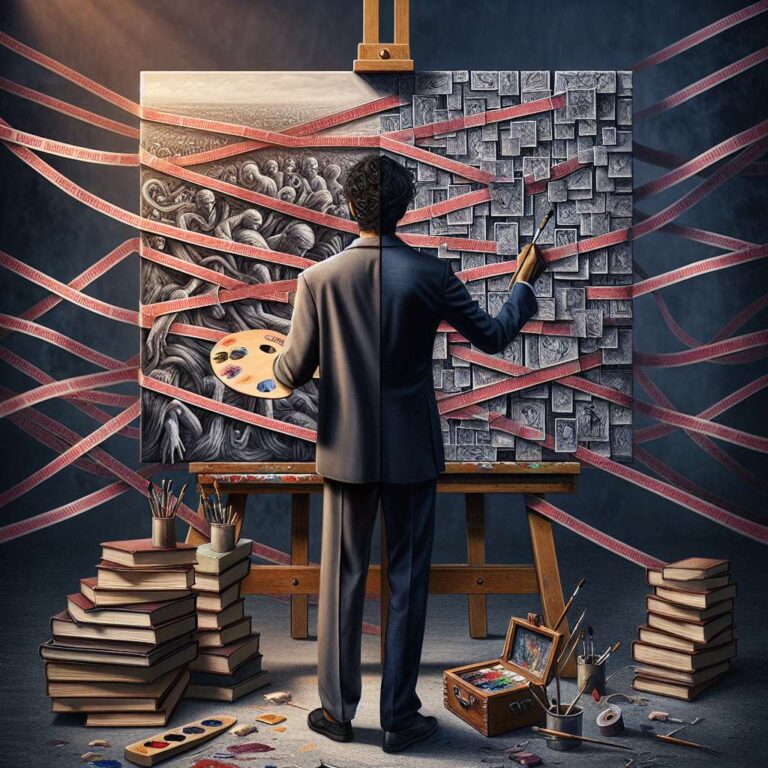
Despite fears that mass Artificial Intelligence use could dilute originality and muddy claims of authorship, the author argues that creativity has always been recursive and collaborative. Tools—from the word processor to generative models—are just the latest extension of creative labor. As professionals quietly integrate Artificial Intelligence into writing, composing, and producing, the real danger lies in letting copyright anxieties chill a tradition built on transformation. If the law insists on strict ownership and absolute originality, creativity itself is at risk of stagnation. The standard, the essay contends, must be meaningful human engagement, not technological purity or unattainable originality.
78

Impact Score

Congress weighs Artificial Intelligence transparency rules

Bipartisan lawmakers are pushing a federal transparency standard for the largest Artificial Intelligence models as Congress works on a broader national framework. The proposal aims to increase public trust while avoiding stricter state-by-state requirements and heavier regulation.

Report finds California creative job losses are not driven by Artificial Intelligence

New research from Otis College of Art and Design finds California’s recent creative industry job losses stem from cost pressures and structural shifts, not direct worker displacement by generative Artificial Intelligence. The technology is changing workflows and expectations, but it is largely replacing tasks rather than entire jobs.

U.S. senators propose broader chip tool export ban for Chinese firms

A bipartisan proposal in the U.S. Senate would shift semiconductor equipment controls from specific fabs to targeted Chinese companies and their affiliates. The measure is aimed at cutting off access to advanced lithography and other wafer fabrication tools for firms such as Huawei, SMIC, YMTC, CXMT, and Hua Hong.

Trump executive order targets state Artificial Intelligence laws

Executive Order 14365 lays out a federal strategy to discourage, challenge, and potentially preempt state Artificial Intelligence laws viewed as burdensome. Employers are advised to keep complying with current state and local rules while preparing for regulatory uncertainty in 2026.

Who decides how America uses Artificial Intelligence in war

Stanford experts are divided over how the United States should govern Artificial Intelligence in defense, surveillance, and warfare. Their views converge on one point: decisions with such high stakes cannot be left to companies alone.

Contact Us

Got questions? Use the form to contact us.

Contact Form

Clicking next sends a verification code to your email. After verifying, you can enter your message.