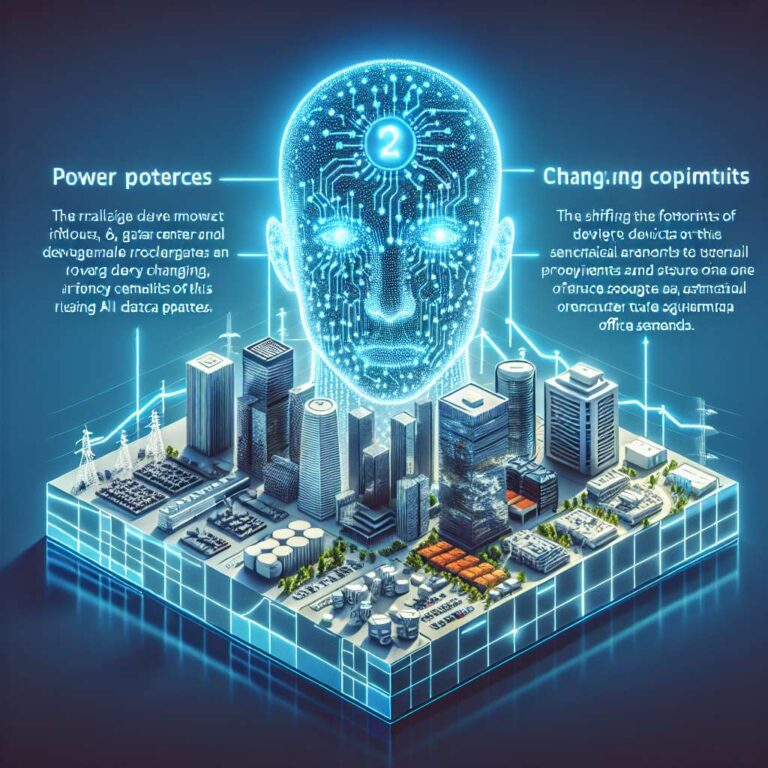
Bisnow’s Artificial Intelligence coverage paints a clear picture of a sector in flux: data center expansion, power procurement and office demand are converging to redefine commercial real estate. Headlines highlight how developers, utilities, financiers and occupiers are rapidly adapting to the compute surge. Apollo plans to acquire a hydroelectric power operator to underpin data center loads, while Meta is preparing to spend hundreds of billions of dollars on Manhattan-sized campuses. A Bain study flags a large supply-demand gap for Artificial Intelligence capacity, underscoring why capital is rushing into development and infrastructure.
Power has become the decisive constraint and battleground. Google is partnering with two utilities on demand response to curb usage during peak stress, and the Department of Energy has identified federal land for data centers and power plants while also launching a study into how Artificial Intelligence data centers affect Americans’ electric bills. Equinix is increasing annual spending to meet demand, CoreWeave raised new funding for a Pennsylvania facility, and Elon Musk’s xAI acquired a power plant site near Artificial Intelligence data centers. Investors and operators are also recalibrating logistics and industrial strategies, with supply chain stakeholders “following the power” as grids are tested.
Artificial Intelligence is also reshaping office markets. New York City is seeing a growth spurt in Artificial Intelligence leasing footprints, the Bay Area’s office rebound is being fueled by Artificial Intelligence tenants, and almost a fifth of Great Portland Estates’ flex portfolio in London is leased to Artificial Intelligence firms. Amazon, meanwhile, is directing thousands of employees to relocate as its chief executive touts the technology’s ability to replace jobs, signaling evolving workplace strategies and talent clustering in hubs aligned with compute and research.
On the capital and strategy front, BGO says it is using Artificial Intelligence to rewrite its investment thesis, while a Deloitte survey of commercial real estate executives finds recovery has paused due to capital market concerns. Bisnow compiled a list of 123 Artificial Intelligence firms reshaping the industry, illustrating how tools are moving from experiment to execution. Oxford Economics’ Michael Pearce weighed whether the current cycle is a supercycle or a bubble, pinpointing data centers as a central risk to watch, and separate reporting raises investor questions about how quickly Artificial Intelligence-driven data center demand will translate into stable returns.
Policy and corporate positioning continue to evolve. OpenAI refutes that it is considering leaving California, even as companies like Google, Blackstone and Brookfield are among those slated to invest in Artificial Intelligence and energy initiatives. Taken together, the beat shows an ecosystem sprinting to secure power, sites and talent, with the next leg of Artificial Intelligence growth poised to hinge on infrastructure delivery and cost discipline.