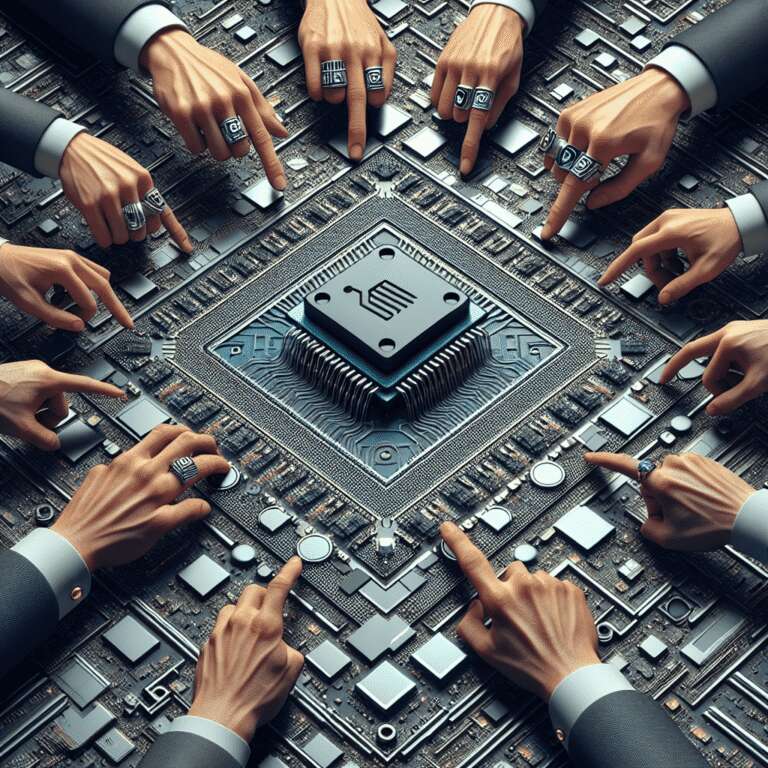
The semiconductor industry is undergoing seismic shifts as TSMC, the world´s largest contract chipmaker, has reportedly proposed taking over Intel´s foundry operations and is seeking support from industry powerhouses including Nvidia, AMD, and Broadcom. This bold move would see TSMC not only assume operational control of Intel´s foundry but also cement strategic partnerships with major U.S. chip designers, potentially reshaping the global manufacturing landscape. The proposed joint venture is intended to guarantee significant investment and strategic alignment, with Nvidia and its peers providing both financial clout and technical expertise to keep pace with rapid innovation and growing demand in advanced chip production.
This shakeup comes as major players in the Artificial Intelligence space—OpenAI, Meta, and Apple—are actively working to reduce their dependence on Nvidia’s market-leading but expensive chips. These pioneers are investing heavily in developing and deploying their own custom accelerators and silicon, betting that control over critical hardware will offer a strategic edge and cost benefits in the Artificial Intelligence arms race. With cloud workloads booming and generative Artificial Intelligence applications multiplying, their efforts threaten to chip away at Nvidia’s profit margins and marketplace dominance, forcing the company to innovate faster and seek new competitive moats.
The competition extends globally, as Nvidia’s CEO Jensen Huang has recently commented on the risks posed by U.S. export restrictions, warning that bans could encourage rivals in China and elsewhere to develop alternative hardware platforms, escalating the global Artificial Intelligence race. Meanwhile, Nvidia continues to fortify its own position through R&D investments and geographic expansions, including a marked presence in Israel and licensing new interconnect technologies for next-generation Artificial Intelligence chips. As supply chain partnerships and strategic alliances become increasingly vital, the battle for leadership in semiconductor manufacturing and Artificial Intelligence hardware promises to redefine the industry´s power dynamics in the years ahead.