
Teledyne e2v starts production of 16 GB DDR4-X1 flight models

Teledyne e2v has begun full production of its 16 GB DDR4-X1 Flight Model for space applications. The memory device targets the rising onboard computing and storage demands of Artificial Intelligence-enabled satellites and other data-intensive space systems.

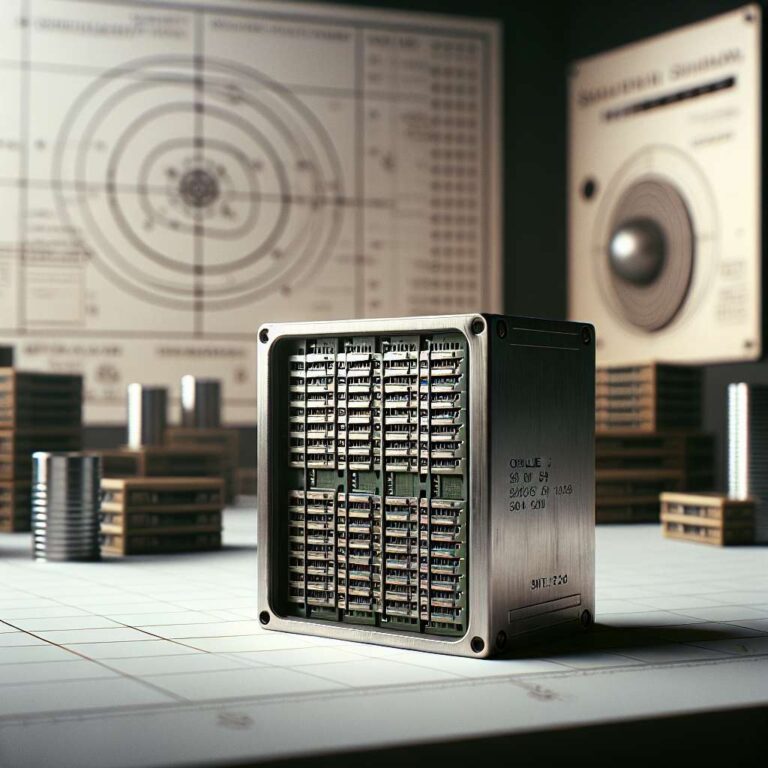
Teledyne e2v has started full production of its 16 GB DDR4-X1 Flight Model, expanding its portfolio of high-density, radiation-tolerant memory products for space applications. The component is aimed at spacecraft that need higher onboard processing and storage capacity while operating in demanding mission environments.

The new memory device is positioned for the growing requirements of Artificial Intelligence-enabled satellites, large constellations, broadband Internet-from-Space, Direct-to-Device services, and optical inter-satellite communications. By combining high memory density, radiation resilience, and a compact footprint, the component is intended to help spacecraft manage increasingly demanding onboard computing workloads.

Initial samples of the 16 GB DDR4-X1 Flight Models were delivered to customers in October 2025, allowing early system integration and evaluation. The device supports data rates up to 2400 MT/s, provides single-event latch-up immunity above 43 MeV·cm²/mg, and offers radiation tolerance up to 35 krad TID, enabling reliable operation in mission-critical space environments.
50

Impact Score

Google and other chatbots surface real phone numbers

Generative Artificial Intelligence chatbots are surfacing real phone numbers and other personal details, sometimes by pulling from obscure public sources and sometimes by inventing plausible but wrong contact information. Privacy experts say users have few reliable ways to find out whether their data is in model training sets or to force its removal.

U.S. and China revisit Artificial Intelligence emergency talks

Washington and Beijing are exploring renewed talks on an emergency communication channel for Artificial Intelligence as fears grow over the capabilities of Anthropic’s Mythos model. The shift reflects rising concern in both capitals that competitive pressure is outpacing safeguards.

Artificial Intelligence divides employers as hiring and headcount shift

U.S. hiring beat expectations in April, but employers remain split on whether Artificial Intelligence should drive layoffs, productivity gains, or internal redeployment. At the same time, candidate use of Artificial Intelligence is outpacing employer adoption in hiring, adding new pressure to screening and entry-level recruiting.

Contact Us

Got questions? Use the form to contact us.

Contact Form

Clicking next sends a verification code to your email. After verifying, you can enter your message.