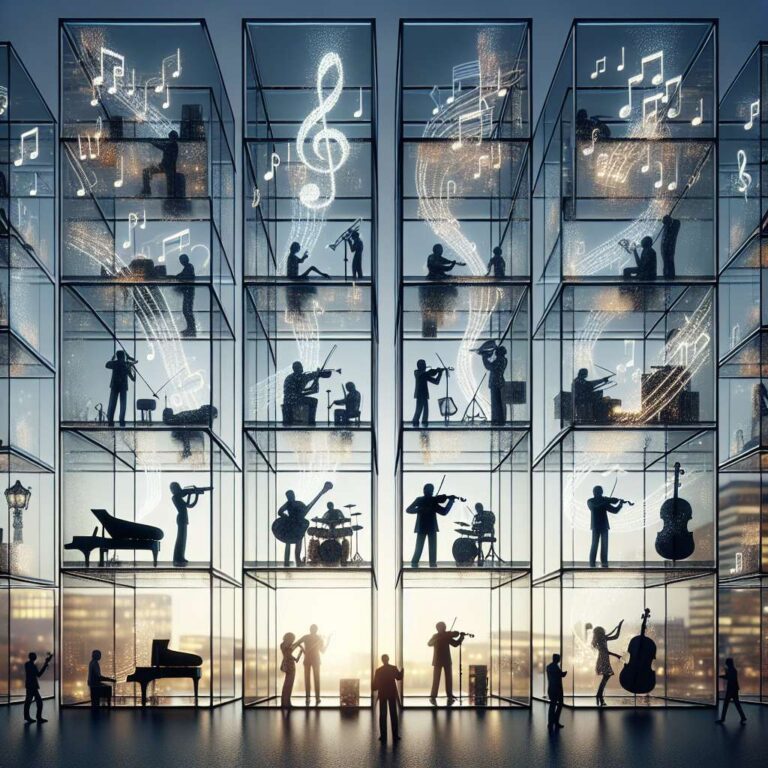
The Edward and Joyce Linde Music Building at MIT consolidates the institute’s dispersed music facilities into a 35,000-square-foot home for performance, rehearsal, recording, and fabrication. The building houses the 390-seat Thomas Tull Concert Hall, the Beatrice and Stephen Erdely Music and Culture Space for world music, and the Lim Music Maker Pavilion makerspace, plus dedicated recording suites and offices. Donor support enabled a purpose-built facility intended to let classical, jazz, world, and electronic music coexist without interfering with one another.
Acoustic design shaped the building from the start. Architects SANAA and Nagata Acoustics employed a three-block layout with thick double concrete shells and box-in-box construction to create acoustically isolated zones and reduce vibration transfer. Tull Concert Hall features a 50-foot ceiling, movable ceiling baffles and perimeter curtains that let the room switch between resonant and dry acoustic settings, and a circular seating arrangement that places performers at the floor with listeners around and above them, enabling immersive and spatial configurations.
The building’s technical infrastructure supports creative experimentation and high-quality production. Studios include a main recording room, isolation booth, and control room linked by a Dante digital audio network for low-latency, high-fidelity routing across spaces. The makerspace provides soldering stations, CNC and laser cutters, and testing gear for building instruments, sensors, and custom electronics. Students and researchers have already prototyped sensor boxes, bespoke instruments, and embedded systems that integrate performance with data collection and fabrication workflows.
MIT will base a new one-year master’s program in music technology in the building, bringing together faculty from music and engineering. Faculty and students are reshaping curricula to incorporate spatial acoustics, interactive sound design, instrument making, and studies of Artificial Intelligence in musical collaboration. Early performances, workshops, and research projects suggest the building is fostering cross-disciplinary exchange and new forms of composition, pedagogy, and public engagement with sound.