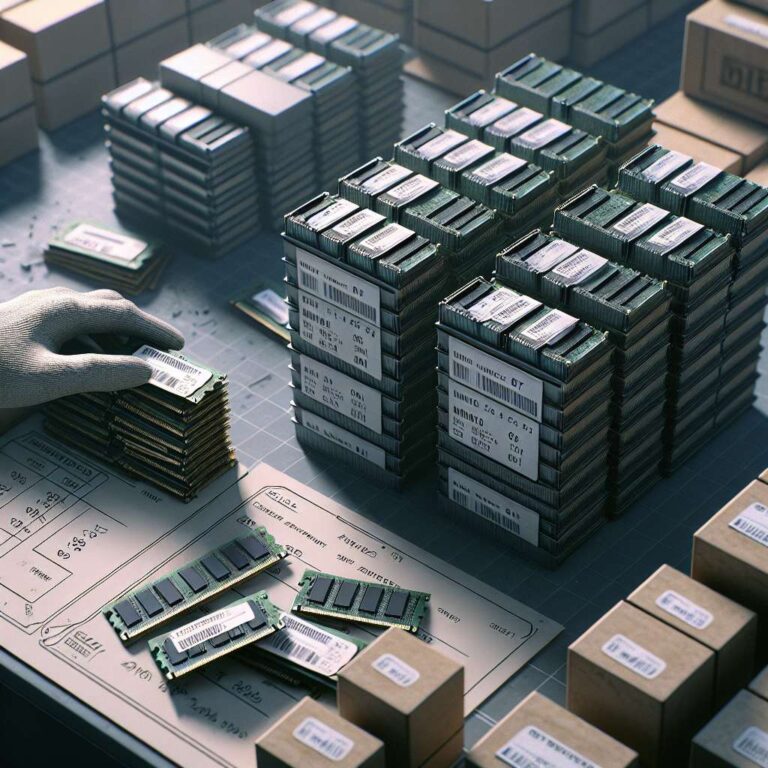
Micron has notified customers that its DDR4 memory products will reach end of life within the next six to nine months, marking a significant step in the industry´s pivot away from the widely adopted standard. Shipments will begin tapering off soon, bringing the company´s stance in line with rivals Samsung and SK Hynix, who have already outlined plans to discontinue DDR4 in favor of next-generation offerings. These include DDR5, LPDDR5, and various high-bandwidth memory solutions. The decision, however, comes at a time when DDR4 demand remains remarkably strong. Sumit Sadana, executive vice president and chief business officer at Micron, noted in an interview that supply constraints for both DDR4 and LPDDR4 have pushed spot-market prices above those of newer DDR5 modules in some cases.
To navigate these supply challenges, Micron will prioritize its long-term partners in sectors where stability and dependability are essential, such as automotive, industrial, and networking applications. These industries rely on consistent product quality and extended contractual support, justifying Micron´s decision to serve them first as the supply dwindles. The broader shift away from DDR4 has also been pushed forward by aggressive competition from Chinese memory manufacturers. Flooding the market with lower-cost modules, these new entrants have exerted price pressure on established vendors, but questions linger about their capacity to match the reliability, support, and production volume historically expected from leaders like Micron.
Despite the robust demand backdrop, Micron is urging its customers to migrate to DDR5 and LPDDR5, technologies that now offer advanced bandwidth and energy efficiency at competitive price points. The company positions these products as the future of the memory industry, ideally suited to meet the evolving performance and efficiency needs of a rapidly changing tech landscape. As DDR4 sunsets, the focus for enterprise and industrial clients shifts firmly to next-generation platforms and the value-added support that established manufacturers can provide over emerging rivals. This phase-out signals not only the conclusion of an era for DDR4 but also the acceleration of advancements in memory technology across sectors reliant on high-performance, reliable components.