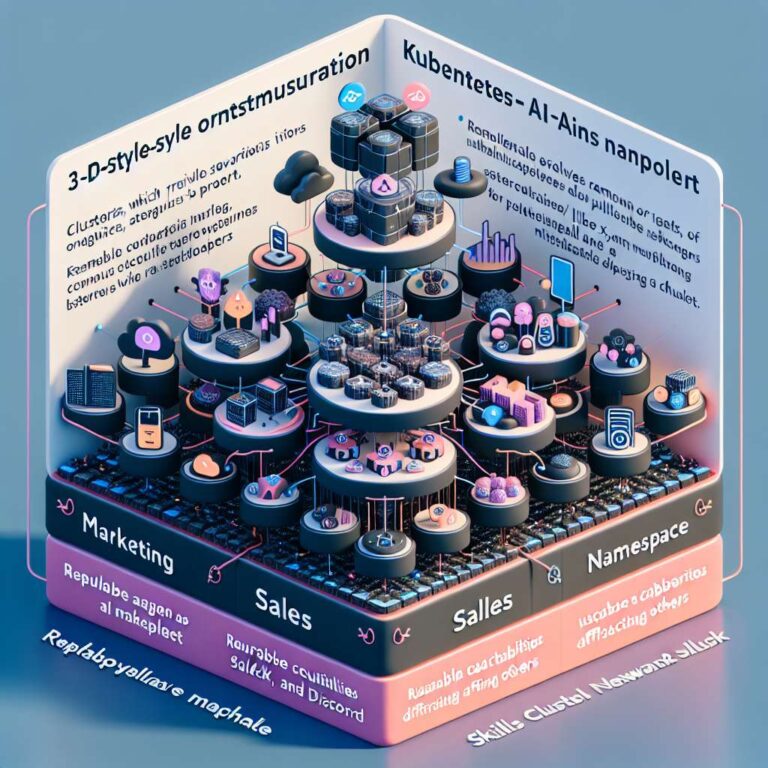
Klawsh is a new orchestration tool designed to manage fleets of artificial intelligence agents using a model inspired by Kubernetes, but without depending on a Kubernetes cluster. The creator, who runs a generative artificial intelligence infrastructure company providing a unified API for 600+ models, built Klawsh after internal use of agents for marketing, lead generation, content, engagement, and analytics across multiple X accounts exposed operational pain points. OpenClaw was sufficient for single agents, but at approximately 14 agents across 6 accounts, the main challenge shifted from building agents to managing them, including deployment, monitoring, team isolation, and tracing failures.
Klawsh adopts core Kubernetes concepts such as clusters, namespaces, and declarative deployments, but targets artificial intelligence agents as the unit of work rather than containers. Clusters provide isolation per organization or project, namespaces give team level separation for functions like marketing, sales, and support, and channels connect agents to platforms such as Slack, X, and Discord. Skills represent reusable agent capabilities distributed via a marketplace. The command line interface mirrors kubectl with commands like klaw create cluster mycompany, klaw create namespace marketing, and klaw deploy agent.yaml. The system was rewritten from Node.js to Go, which reduced individual agent binaries from 800MB+ to under 10MB each and allows distribution as a single standalone binary with zero external dependencies.
The tool emphasizes fleet operations and isolation rather than agent collaboration logic, positioning itself a layer above frameworks like CrewAI or LangGraph, which define how agents cooperate on tasks. A typical usage pattern described is a “content cluster” where each X account is mapped to its own namespace so a misbehaving agent on one account cannot affect others, and adding a new account is a klaw create namespace [account] plus deploying the same configuration that is reported to take 30 seconds. Klaw includes a controller node architecture where machines can be joined with klaw node join and agents deployed to specific nodes, enabling distributed agent management. Early feedback in the discussion focuses on clarifying that Klaw is not a Kubernetes operator, the roadmap for stronger secret isolation between controller and namespaces, potential human approval flows for agent actions, and licensing, which is source available with a restriction on operating multi tenant managed services that resell artificial intelligence agent orchestration.