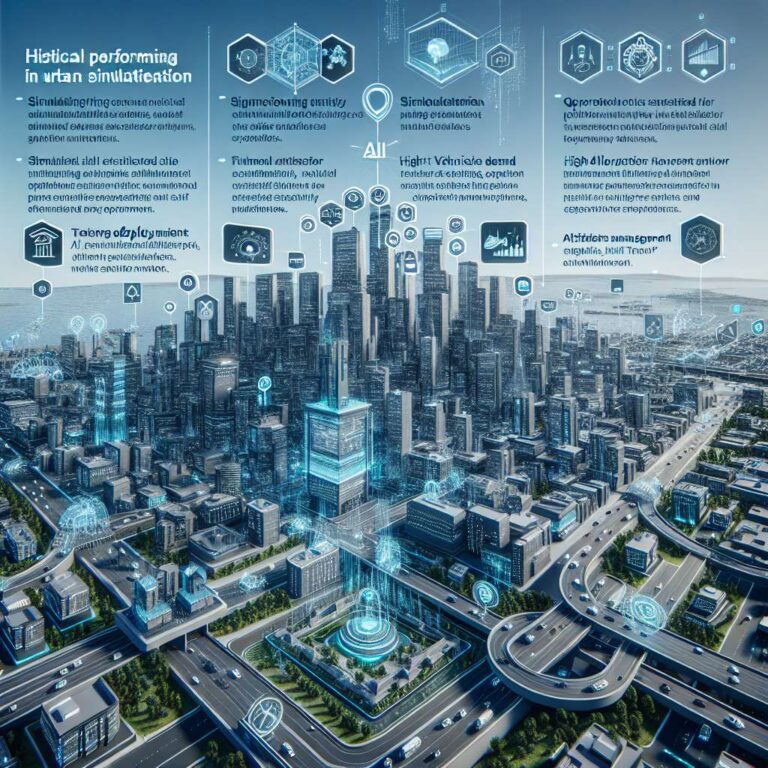
Cities worldwide face growing operational strain from rising populations and aging infrastructure, with traffic congestion and emergency coordination complicated by fragmented data pipelines and siloed processes. OpenUSD is presented as an open, extensible framework that connects each stage of a physical Artificial Intelligence workflow and supports SimReady digital twins. Those digital twins generate physically accurate sensor data that let planners and operators run “what if” scenarios and test rare conditions without impacting live systems.
The NVIDIA Blueprint for smart city Artificial Intelligence provides a reference application and complete software stack to build, test and operate Artificial Intelligence agents in simulation-ready digital twins. The blueprint outlines a three-stage workflow: simulate with the NVIDIA Cosmos platform and NVIDIA Omniverse libraries to produce synthetic data, train and fine-tune computer vision models, and deploy real-time video analytics Artificial Intelligence agents using the NVIDIA Metropolis platform together with the video search and summarization blueprint. Integrated operational platforms then converge weather data, traffic sensors and emergency response systems to enable proactive city management, rapid testing and continuous monitoring.
Multiple deployments illustrate measurable benefits. Akila’s digital twin application for SNCF Gares&Connexions delivered a 20% reduction in energy consumption, 100% on-time preventive maintenance and a 50% reduction in downtime and response times. Linker Vision’s physical Artificial Intelligence system in Kaohsiung City cut incident response times by 80% by recognizing damaged streetlights and fallen trees. The City of Raleigh reached 95% vehicle detection accuracy using NVIDIA DeepStream integrated with Esri’s ArcGIS and Azure, enhancing its digital twin. Milestone Systems’ Hafnia visual language model, fine-tuned on more than 75,000 hours of video, can reduce operator alarm fatigue by up to 30%. K2K’s platform analyzes over 1,000 video streams in Palermo, processing about 7 billion events annually and notifying officials through natural language queries. The article also points readers to on-demand sessions, a technical blog and NVIDIA Cosmos cookbooks for implementation guidance.