Anthropic has been valued at almost US?tn after raising US?bn in one of the largest private technology funding rounds ever announced. The company, best known for its Claude Artificial Intelligence assistant, said the Series H round valued it at US?bn after the new investment. That puts Anthropic close to the symbolic trillion-dollar mark, despite being privately held and only founded in 2021.
Anthropic said the money will be used to advance its safety and interpretability research, expand the computing power needed to run Claude, and scale the products and partnerships used by its customers. Claude is one of the main rivals to ChatGPT and is increasingly being sold to companies for coding, research, document work, customer support, security and other business tasks. Anthropic said global enterprises across industries are now deploying Claude in core operations, while more people are using it for everyday work.
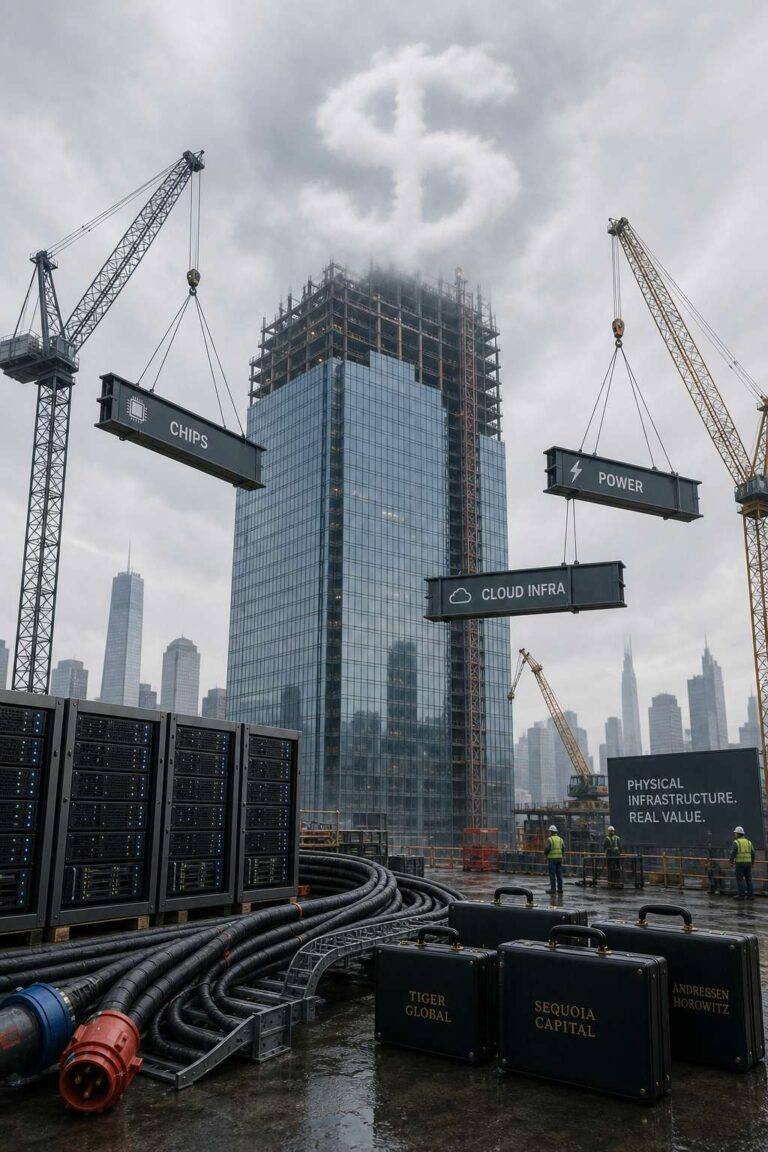
Anthropic said adoption had continued to grow since its Series G round in February and that its run-rate revenue crossed US?bn earlier this month. Run-rate revenue is a forward-looking annualised measure based on current revenue levels, rather than the same as full-year audited sales. The scale of the round also reflects the cost of competing at the top of the Artificial Intelligence market, where frontier companies require large amounts of computing power, advanced chips, cloud capacity and energy to train and run models used by millions of people and businesses.
Anthropic said the round includes US?bn of previously committed investments from hyperscalers, including US?bn from Amazon. Strategic infrastructure partners Micron, Samsung and SK hynix are also joining the round. Anthropic said their technologies play a critical role in the supply of memory, storage and logic chips, which are needed as demand for Claude grows.
The company said it had significantly expanded compute capacity in recent weeks. It has signed agreements with Amazon for up to five gigawatts of new capacity, with Google and Broadcom for five gigawatts of next-generation TPU capacity, and with SpaceX for access to GPU capacity in Colossus 1 and Colossus 2. The funding was led by Altimeter Capital, Dragoneer, Greenoaks and Sequoia Capital, with additional backing from investors including Blackstone, Brookfield, Fidelity, General Catalyst, Insight Partners, Jane Street, Lightspeed Venture Partners, MGX, Temasek and others.