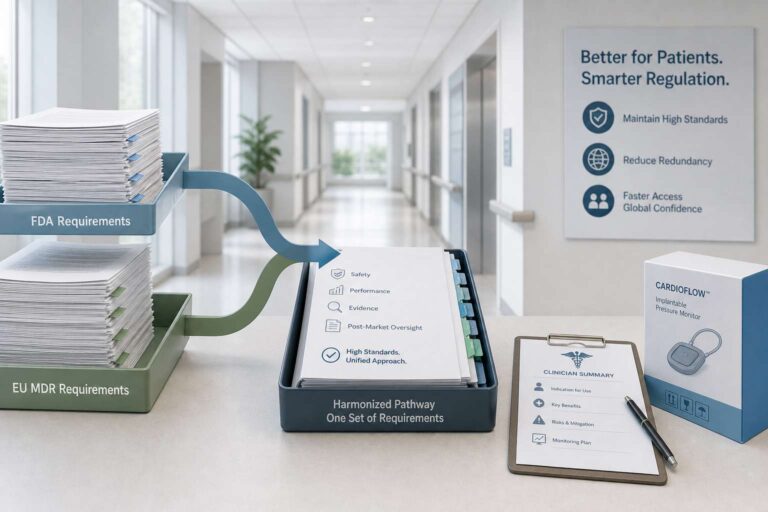
Recent regulatory changes in the UK and EU point to a more streamlined approach to medical device oversight, with both jurisdictions trying to improve efficiency, clarity and access to market while maintaining safety standards. The direction of travel is toward more predictable approval processes and clearer compliance expectations for manufacturers.
In the EU, new rules under the Medical Devices Regulation and In Vitro Diagnostic Regulation are intended to address long-standing concerns about delays, inconsistent assessments and uncertainty over costs. Standardised timelines for conformity assessments and clearer requirements for notified bodies are designed to make the approval process more predictable for manufacturers. Amendments to the EU Artificial Intelligence Act will give manufacturers until August 2028 to meet requirements for high-risk Artificial Intelligence systems. However, companies developing Artificial Intelligence-enabled medical devices will still face overlapping compliance obligations under both the Artificial Intelligence Act and MDR/IVDR frameworks.
In the UK, draft legislation published in 2026 sets out a major overhaul of the medical devices regime through a new standalone framework aligned with international standards. The proposals include stronger safety and documentation requirements, updated classification systems, and the introduction of unique device identifiers. Together, those measures are meant to modernise the regime and create a clearer structure for device regulation.
The UK proposals also include an international reliance pathway, allowing regulators to draw on approvals from trusted countries such as the US, Canada and Australia to support faster market access. Industry has welcomed that route as a practical way to reduce duplication and speed access to new technologies. Across both markets, the reforms reflect a more pragmatic regulatory posture focused on reducing bottlenecks, supporting innovation and preserving patient safety.