
Intel and Saimemory team up on next generation Z-Angle memory for artificial intelligence and HPC

Intel and SoftBank subsidiary Saimemory are collaborating on Z-Angle Memory, a stacked DRAM technology that aims to surpass current high-bandwidth memory for artificial intelligence and high-performance computing with higher capacity, bandwidth, and lower power use.

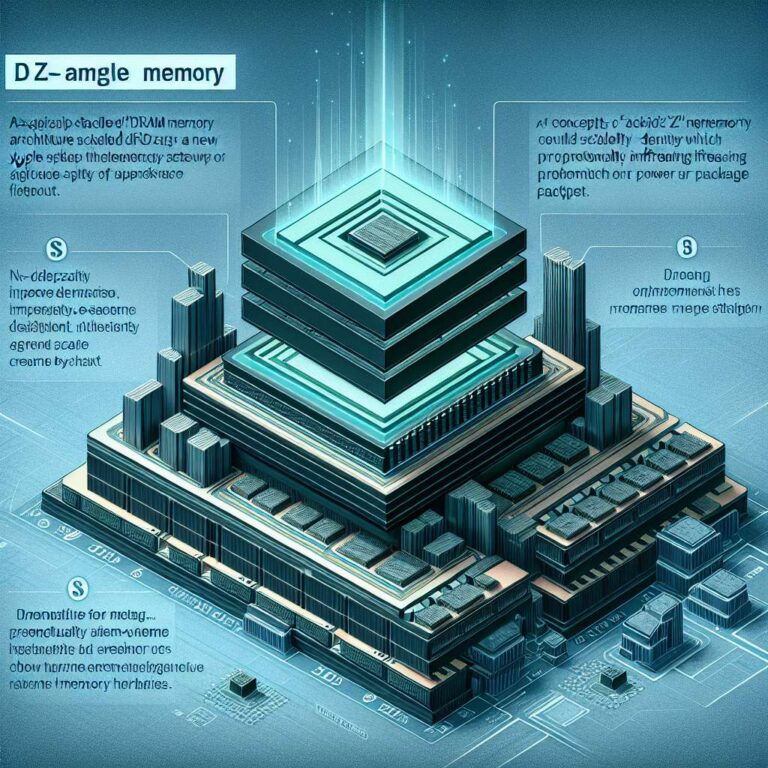
Intel and SoftBank subsidiary Saimemory have entered an agreement to jointly develop and commercialize Z-Angle Memory technology for artificial intelligence and high-performance computing workloads. Z-Angle Memory is described as a stacked DRAM architecture intended to exceed current high-bandwidth memory solutions in capacity and bandwidth while reducing power consumption. The name reflects its use of vertical Z-axis stacking, and the effort is positioned as a response to rising memory bandwidth and efficiency demands from advanced compute systems.

The collaboration leverages Intel’s Next Generation DRAM Bonding work, which emerged from the U.S. government-backed Advanced Memory Technology program conducted with Sandia, Lawrence Livermore, and Los Alamos national laboratories. Recent Next Generation DRAM Bonding prototypes featuring eight vertically stacked DRAM layers have demonstrated full functionality using the new vertical stacking and bonding method, according to disclosures from Sandia in January. This underlying bonding technology forms a key foundation for the new Z-Angle Memory approach that Intel and Saimemory plan to bring to market.

According to reports, Saimemory is targeting two to three times the capacity of today’s high-bandwidth memory, with 40-50% lower power consumption, while aiming to keep costs competitive. Saimemory plans to have prototypes ready by early 2028, with commercial products following in 2029. SoftBank is said to be investing around ¥3 billion through the prototype phase to support this development roadmap. For Intel, the partnership represents a strategic return to advanced memory technologies after having exited the DRAM market decades ago, aligning the company more closely with emerging memory architectures tailored for artificial intelligence and high-performance computing.
58

Impact Score

Firefox 148 adds artificial intelligence killswitch after user backlash

Mozilla is adding a persistent artificial intelligence killswitch to Firefox 148 after strong community backlash against plans for an artificial intelligence first browser experience. Users will be able to disable individual artificial intelligence features or shut them all off with a single control.

Western Digital unveils high bandwidth hard drives with 4x I/O performance

Western Digital is introducing new high bandwidth hard drives that combine multi-head read and write techniques with a dual actuator design to significantly boost I/O performance while preserving capacity. The roadmap targets up to 100 TB HDDs with throughput that aims to rival traditional QLC SSDs on price and density.

Nvidia and Dassault deepen partnership to build industrial virtual twins

Nvidia and Dassault Systèmes are expanding their long-running partnership to build shared industrial Artificial Intelligence world models that merge physics-based virtual twins with accelerated computing. The companies aim to shift engineering, manufacturing and scientific work into real-time, simulation-driven workflows powered by Artificial Intelligence companions.

Moltbot and the case for human agency as the core Artificial Intelligence guardrail

Moltbot’s viral rise highlights both the appeal of deeply personalized Artificial Intelligence agents and the rising need for users to assert their own agency, security practices, and governance. Human decision making and responsibility emerge as the decisive safeguard as open source agentic Artificial Intelligence systems gain system level powers.

Contact Us

Got questions? Use the form to contact us.

Contact Form

Clicking next sends a verification code to your email. After verifying, you can enter your message.