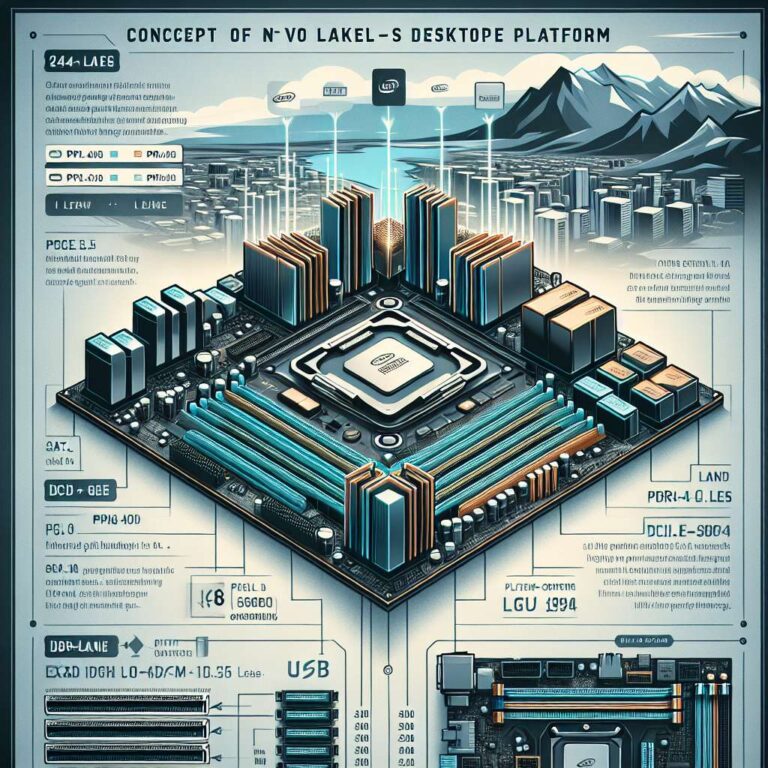
Leaked specifications for Intel´s forthcoming Nova Lake-S desktop platform indicate a strong emphasis on both connectivity and memory performance enhancements. The company´s continued commitment to a 48-lane PCIe structure will see 24 PCIe 5.0 lanes coming directly from the CPU, offering users substantial flexibility for high-speed devices. An extra four DMI Gen 5 lanes bolster the connection between processor and chipset, while the PCH (platform controller hub) supplies an additional eight PCIe 5.0 lanes and sixteen PCIe 4.0 lanes. Storage and peripheral options are set to expand, with support for eight SATA 3.0 ports and a breadth of USB configurations including legacy coverage—fourteen USB 2.0 ports—and high-speed connections, such as five USB 3.2 ports at 20 Gbps, ten at 10 Gbps, and another ten at 5 Gbps. Diverse lane configuration options, ranging from a classic x16 slot with two x4 connections to dual x8 plus extra x4 links, adapt to a variety of system builds and specialized hardware setups.
The Nova Lake-S platform´s standout feature is its leap in memory speeds. Unlike the current Arrow Lake-S chips, which natively support DDR5-6400 and can overclock up to 9,200 MT/s, Nova Lake-S will introduce out-of-the-box DDR5-8000 compatibility in one-DIMM per channel single-rank modes. Such memory advancements are poised to significantly boost data throughput, which is crucial for users running computationally intensive software, large-scale multitasking, or modern games. With rumors pointing to flagship models sporting as many as 52 processing cores, ample memory bandwidth will be essential to maintain performance and system responsiveness under heavy workloads.
This new direction in memory and interconnects necessitates a shift in hardware standards: Nova Lake-S will bring a new LGA 1954 CPU socket and lead to an entirely refreshed motherboard ecosystem. However, it remains unclear whether the generational memory speed jump stems from an improved on-die memory controller or sophisticated motherboard optimizations, such as refined power delivery or trace design. While partners have reportedly received early technical documentation, neither public benchmark results nor engineering samples have surfaced in regulatory databases or hardware enthusiast forums, signaling that the platform is still in the early stages of pre-release development.