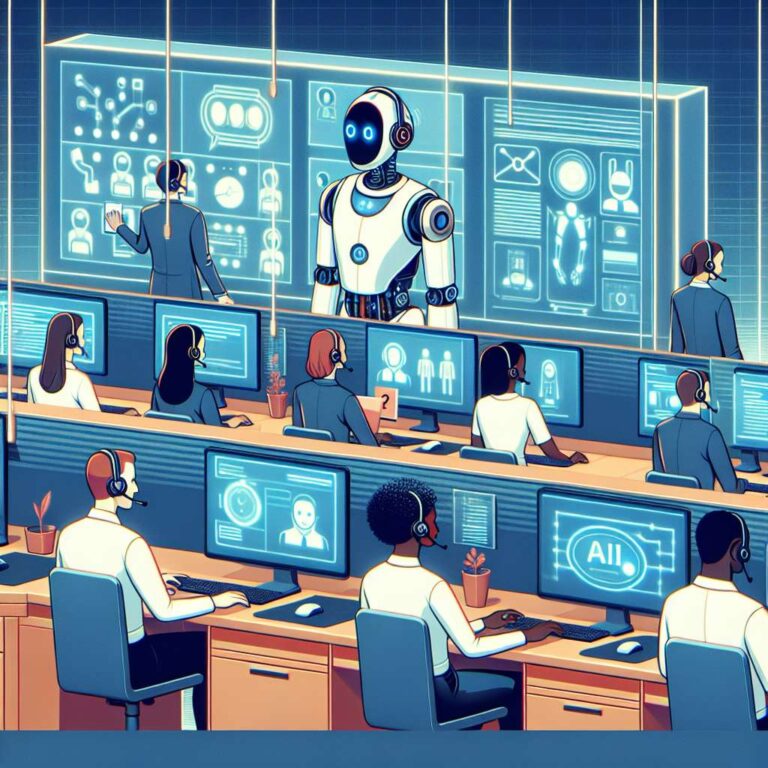
Businesses are reconsidering broad moves to replace customer service agents with bots, according to a recent Gartner report. The study, which surveyed 163 customer service and support leaders, revealed that 50 percent of organizations intend to abandon their initial plans to significantly reduce human staff in customer service by 2027. This shift underscores the technical and operational difficulties that enterprises face in trying to implement purely Artificial Intelligence-driven customer service models.
Survey data shows that an overwhelming majority, 95 percent, plan to keep human agents working alongside Artificial Intelligence systems, rather than attempting a full transition to agentless operations. Gartner analysts highlighted a mismatch between expectations and current technological realities. While Artificial Intelligence promises efficiency and cost reduction, many businesses have found the transition fraught with unexpected expenses and diminishing customer experience quality. Kathy Ross, senior director analyst at Gartner, emphasized that ´the human touch remains irreplaceable in many interactions,´ despite Artificial Intelligence´s potential to transform the sector.
Customers themselves appear skeptical about Artificial Intelligence-only support. Fifty-one percent of those surveyed trust human agents most for issue resolution, with just 7 percent placing the greatest trust in Artificial Intelligence. Concerns are mounting; 62 percent of customers fear automated systems will make it harder to connect with a live agent. Brian Weber, VP analyst at Gartner, notes that some businesses eagerly embracing generative Artificial Intelligence as a potential panacea have been surprised by disappointing outcomes and hidden costs. Despite some firms like BT moving ahead with deep automation, Gartner’s evaluations conclude that the concept of a fully agentless contact center is neither technically feasible nor desirable at present. Organizations shifting toward Artificial Intelligence also tend to redirect any savings into new technology investments, with a full replacement of humans by bots still well beyond reach.