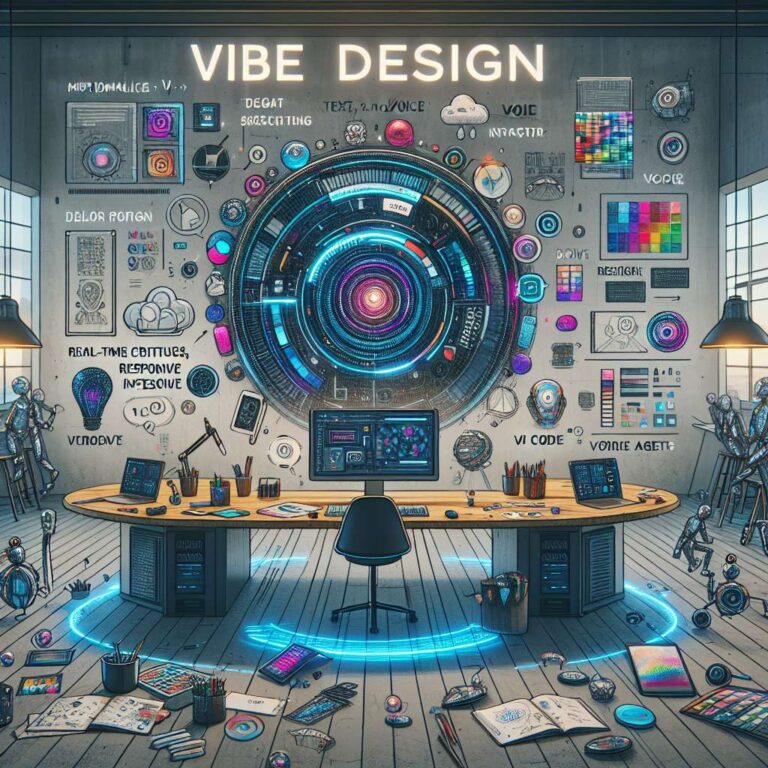
Google on March 18 introduced Vibe Design with Stitch, a revamped version of its Gemini-powered UI design and code-generation tool first introduced in May 2025. The platform is designed to help users create applications and web pages through an Artificial Intelligence-native canvas that combines text prompts, images and code to generate UI designs. Google said a design agent can support the process from start to end, while a new agent manager tracks design progress.
Stitch also includes an agent-friendly markdown file called Design.md that can be used to export or import design rules to or from other design and coding tools. Users can interact with the canvas through voice, and the design agent can provide critiques, create a new landing page and make real time updates. The feature set shows how generative Artificial Intelligence is reshaping both coding and design by letting enterprise developers use natural language and multimodal inputs to build software interfaces more quickly.
Over the last 12 to 18 months, a key target of the human-plus-Artificial Intelligence co-worker concept has been coding. Google’s latest Stitch update fits into the rise of vibe coding, where developers describe what they want to an Artificial Intelligence agent instead of writing everything manually. Bradley Shimmin of Futurum Group said Stitch ultimately functions as another coding agent, noting that it generates TypeScript for an app or HTML and CSS for a web page design.
Shimmin said Google’s approach stands out in how it accommodates multimodal information such as images, audio and text. That allows designers to upload sketches, ideas or images as a color palette to express an interface concept and speed up the design process. He argued that this reflects software’s diminishing utility because users no longer need deep mastery of a specific application when natural language can express design intent directly.
At the same time, the shift introduces governance concerns for enterprises. Shimmin said organizations need deterministic elements to guide platforms like Stitch, including standards for corporate design patterns, requirements, or relevant databases and datasets. Without those controls, constraints and context, using Artificial Intelligence to drive design and development can create unnecessary risk.