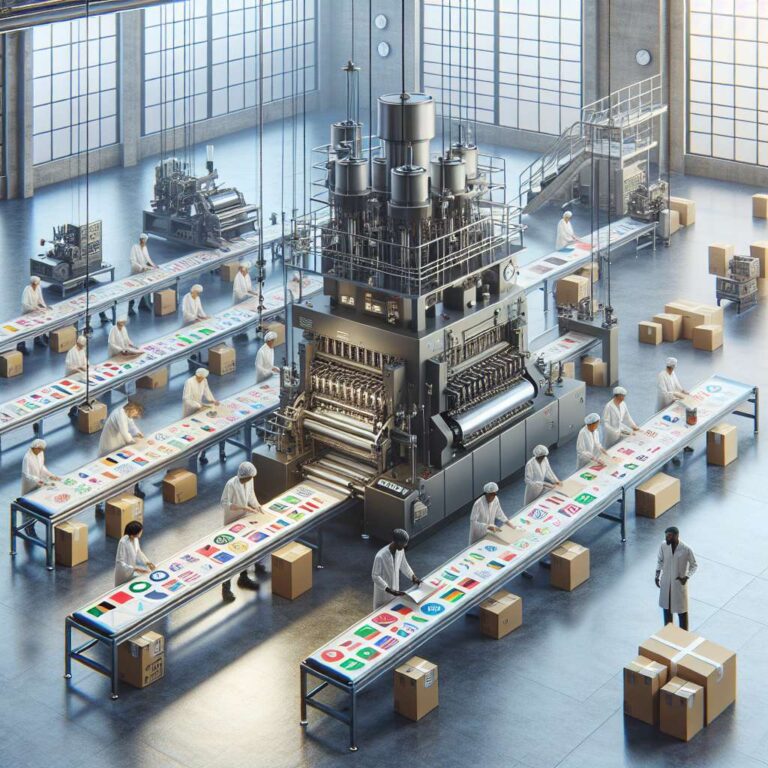
Leading global brands, including Coca-Cola, Moët Hennessy, Nestlé, and Unilever, are revolutionizing marketing operations by leveraging OpenUSD—Universal Scene Description—and NVIDIA Omniverse for accelerated, personalized advertising content. Confronted with the inefficiencies of traditional content pipelines, these companies now use agentic Artificial Intelligence and real-time, rules-based automation to create brand-accurate assets at unprecedented scale and speed, supporting highly localized consumer engagement worldwide.
Specific case studies illustrate remarkable efficiency gains: Moët Hennessy has scaled over 3 million content variations at double the usual speed, while Nestlé cut advertising costs by 70 percent by deploying digital twins. Unilever halved both production timelines and costs, achieving total brand consistency with rapid creative turnaround. This performance is powered by advanced solutions such as Accenture Song’s Artificial Intelligence-driven content services for Nestlé and SKAI Intelligence’s complete AI-native pipeline built on Omniverse. These innovations automate the transformation of physical products into high-quality digital assets, enabling instant adaptation for campaigns across diverse channels.
The backbone of this ecosystem includes centralized OpenUSD asset libraries, generative Artificial Intelligence platforms like Grip, and NVIDIA’s RTX GPUs and Enterprise software, all orchestrated to ensure cross-market brand uniformity. Digital content automation firms such as INDG deploy software-as-a-service solutions for brands like Coca-Cola to produce campaign-ready material within minutes, sidestepping lengthy manual localization. Creative agencies and studios, from Katana Studio to Monks, integrate Omniverse workflows to empower real-time product exploration and customization, fostering the next wave of hyperpersonalized consumer experiences. Collectively, these advances signal a tectonic shift toward cost-efficient, dynamically adaptive, and always-on content creation pipelines, drawing industrywide focus ahead of major conferences like SIGGRAPH, where OpenUSD and 3D innovation will take center stage.