
Black Mixture pioneers creative visual workflows with NVIDIA RTX and generative artificial intelligence

Creative agency Black Mixture leverages NVIDIA RTX-powered generative artificial intelligence to transform visual production, education, and streaming for artists.

Black Mixture, founded by Nate and Chriselle Dwarika in 2010, exemplifies an innovative fusion of traditional artistry and cutting-edge generative artificial intelligence. Originally recognized for its motion design prowess, the agency has evolved its workflow by integrating locally powered artificial intelligence models, allowing for rapid and flexible content production. With a focus on education, Black Mixture curates resources and shares tutorials to empower artists seeking to adopt artificial intelligence in their own creative projects, building an engaged and informed community.

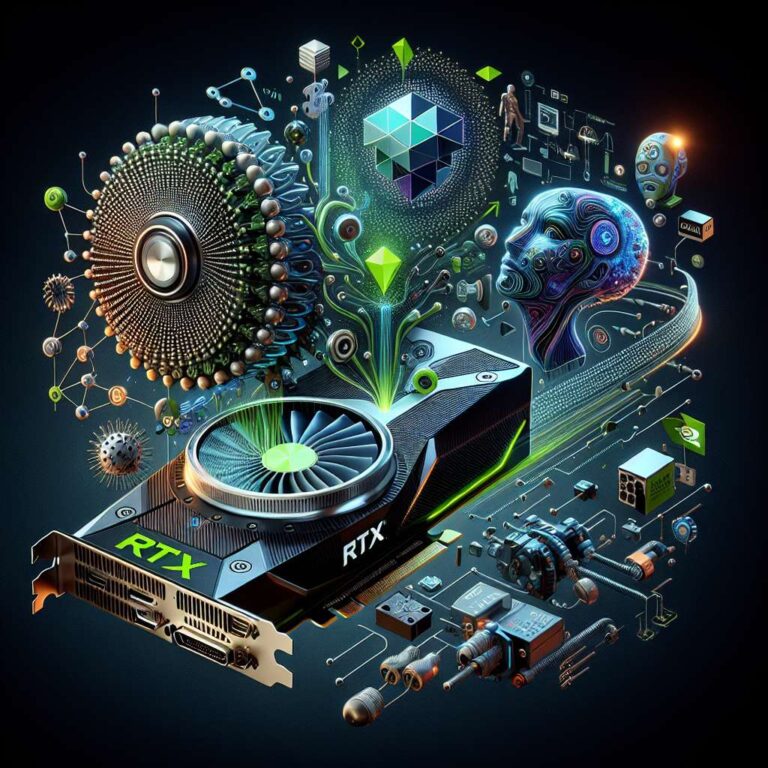
The company’s adoption of NVIDIA GeForce RTX GPUs, particularly the RTX 4090, has been transformative for its pipeline. Leveraging tools like ComfyUI and partnering with platforms such as FLUX.1-dev from Black Forest Labs, Black Mixture achieves image generation speeds previously unattainable using mainstream consumer hardware. For instance, complex generative tasks that take minutes on other systems are completed in seconds on RTX hardware, enabling large-scale batch production and more nuanced artistic iteration. In tandem, quantized generative models reduce VRAM requirements, broadening accessibility and lowering hardware barriers for creators working locally.

Beyond visual asset generation, Black Mixture utilizes a suite of RTX-accelerated content and video tools. OBS Studio and RTX’s NVENC encoder facilitate high-quality video capture without compromising other GPU workloads, while Adobe Premiere Pro’s artificial intelligence features allow for efficient editing and export. The agency’s next venture is an advanced generative artificial intelligence course, featuring live training, guest experts, and exclusive toolkits, reflecting a commitment to cultivating the next generation of digital artists. NVIDIA’s latest Broadcast 2.0.2 update—offering a 15% speed boost for RTX 50 Series and Blackwell GPUs—further enhances streaming features, supporting enriched audio and visual experiences. The synergy of generative artificial intelligence, hardware acceleration, and educational outreach positions Black Mixture at the intersection of creative innovation and accessible technology.
59

Impact Score

DeepWeb-Bench tests limits of deep research models

DeepWeb-Bench is positioned as a tougher benchmark for evaluating whether frontier language models can handle real deep research tasks beyond existing tests. Results point to derivation and calibration, rather than retrieval, as the main weaknesses in current Artificial Intelligence systems.

Google adds conversational ads to Artificial Intelligence mode

Google is rolling out new ad features in Artificial Intelligence Mode aimed at helping businesses, especially smaller advertisers, appear in generative search experiences. The additions bring conversational responses, recommended business listings and lead-generation tools directly into search interactions.

Google shifts its scientific Artificial Intelligence focus

Google is presenting a broader vision for scientific Artificial Intelligence that leans more heavily on agentic, general-purpose systems while still maintaining specialized tools. The shift suggests changing priorities in how the company sees Artificial Intelligence contributing to research.

General-purpose Artificial Intelligence tackles open math problem

OpenAI’s GPT-5 reportedly helped mathematician Ernest Ryu solve a long-standing convex optimization problem now under formal verification. The result points to a broader shift from Artificial Intelligence as a math assistant toward Artificial Intelligence as a source of original research.

Suno faces lawsuit from The American Dollar

Suno has been sued by production duo The American Dollar, who allege its generative Artificial Intelligence music service has damaged their sync licensing business. The case could sharpen the fair use fight around whether Artificial Intelligence training causes direct market harm.

Contact Us

Got questions? Use the form to contact us.

Contact Form

Clicking next sends a verification code to your email. After verifying, you can enter your message.