
Gigabyte Unveils Radeon AI Pro R9700 for Advanced Workstations

Gigabyte showcases the new Radeon AI Pro R9700, a high-end graphics card built for professional visualization and Artificial Intelligence workloads, alongside the award-winning X870E AORUS Master X3D Ice motherboard.

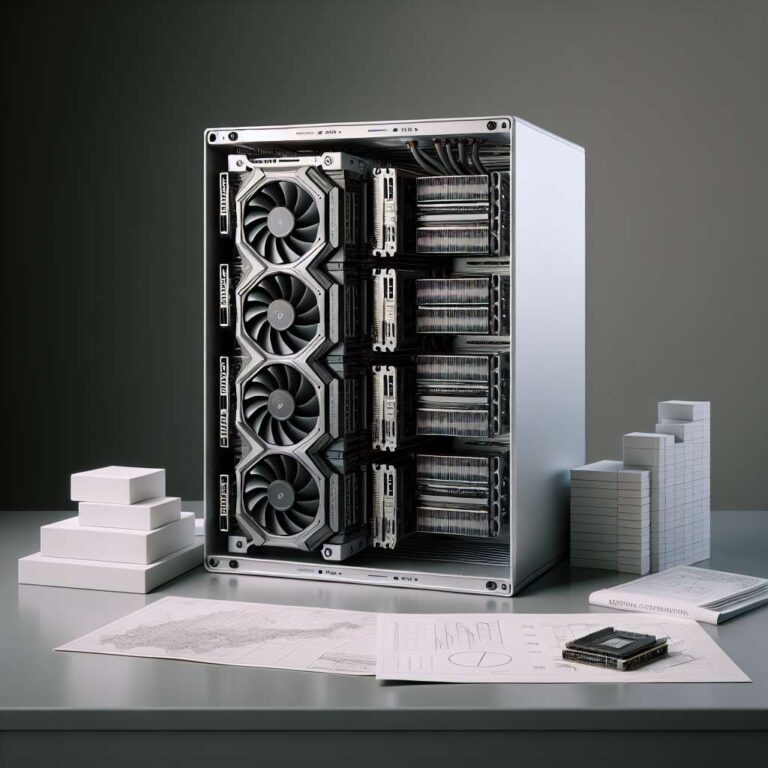
AMD has launched the Radeon AI Pro R9700, a specialized graphics card designed to tackle professional visualization and Artificial Intelligence inferencing applications. Featuring the fully-enabled ´Navi 48´ RDNA 4 silicon, the card is equipped with 32 GB of memory and is validated for enterprise settings. Its architecture supports deployment of up to four cards in a single workstation, collectively utilizing a 128 GB memory pool via the high-speed PCI-Express Gen 5 host interface. In a notable shift from competitors like NVIDIA, AMD allows board partners such as Gigabyte to create custom versions, giving manufacturers flexibility in design and integration.

Gigabyte´s Radeon AI Pro R9700 integrates seamlessly into its AI TOP product line and is engineered for easy scalability in multi-GPU workstation configurations. The card features a two-slot lateral airflow cooling system, which draws air from both sides to enable dense packing of up to four cards side by side on server or workstation motherboards. A recessed obverse side further reduces airflow interference when multiple cards are installed, and the 300 W-rated 16-pin 12V-2×6 power connector is conveniently placed at the card’s tail end, simplifying cable management for system builders.

Alongside the graphics card, Gigabyte displayed the X870E AORUS Master X3D Ice at its booth—an award-winning motherboard that complements high-performance professional systems. The coordinated launch highlights growing demand for robust hardware solutions tailored to the surging needs of the Artificial Intelligence, machine learning, and professional visualization sectors. By leaning into a board partner-driven approach, AMD and partners like Gigabyte target enterprise customers seeking custom, scalable solutions for intensive computational workloads.
55

Impact Score

U.S. and China revisit Artificial Intelligence emergency talks

Washington and Beijing are exploring renewed talks on an emergency communication channel for Artificial Intelligence as fears grow over the capabilities of Anthropic’s Mythos model. The shift reflects rising concern in both capitals that competitive pressure is outpacing safeguards.

Artificial Intelligence divides employers as hiring and headcount shift

U.S. hiring beat expectations in April, but employers remain split on whether Artificial Intelligence should drive layoffs, productivity gains, or internal redeployment. At the same time, candidate use of Artificial Intelligence is outpacing employer adoption in hiring, adding new pressure to screening and entry-level recruiting.

What businesses need to know about the EU cyber resilience act

The EU cyber resilience act is turning product cybersecurity into a legal requirement for companies that sell digital products into the European Union. A key compliance milestone arrives in September 2026, well before the full regulation takes effect in 2027.

Claude Mythos and cyber insurance’s next inflection point

Claude Mythos is being treated by governments and regulators as a potential systemic cyber risk with implications for financial stability and insurance markets. Its emergence is intensifying pressure on insurers to clarify whether Artificial Intelligence-enabled cyber losses are covered, excluded, or require new stand-alone products.

Contact Us

Got questions? Use the form to contact us.

Contact Form

Clicking next sends a verification code to your email. After verifying, you can enter your message.