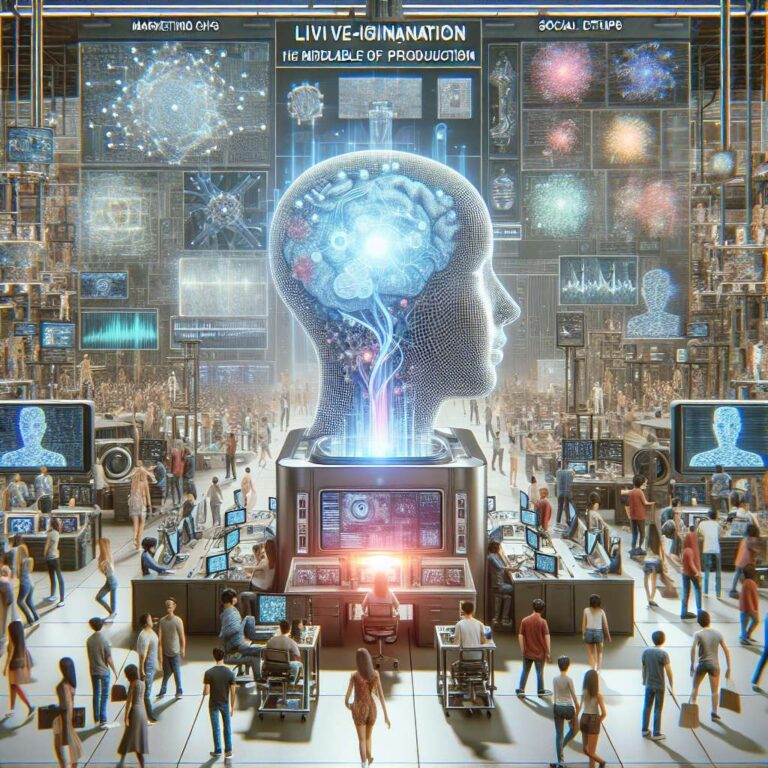
Disney is restructuring how it uses technology by embedding generative Artificial Intelligence into its core operating model rather than treating it as a standalone innovation track. The company faces a familiar challenge for intellectual property driven businesses: it must produce and distribute content at scale across formats and audiences while tightly controlling rights, safety, and brand consistency. Its agreement with OpenAI is presented as a way to resolve this tension by placing Artificial Intelligence inside existing decision and production systems. Under the deal, Disney becomes both a licensing partner and a major enterprise customer, with OpenAI’s video model Sora licensed to generate short, user prompted videos based on a curated set of Disney owned characters and environments.
The arrangement is tightly constrained to protect creative and legal boundaries. Disney is not opening its full catalogue to unrestricted generation, and the licence excludes actor likenesses and voices, limits which assets can be used, and layers in safety and age appropriate controls. In practice, this sets generative Artificial Intelligence up as a governed production layer, generating volume and variation but within strict guardrails. On the consumer side, Artificial Intelligence generated content will appear within Disney+ experiences rather than a separate app, while on the enterprise side employees will access OpenAI’s models, including ChatGPT, through APIs and a standardized assistant instead of disparate point tools. This approach is framed as reducing friction, making usage observable and governable, and treating generative Artificial Intelligence as a horizontal platform capability that can scale across teams.
The Sora licence is focused on short form content derived from pre approved assets, targeting the expensive middle of production where teams need many usable variations pushed through marketing, social, and engagement pipelines. By enabling prompt driven generation inside defined asset sets, Disney aims to cut the marginal cost of experimentation and fan engagement without adding headcount or manual review burden, positioning outputs as inputs into existing workflows rather than finished films. Beyond content, Disney plans to use OpenAI’s APIs as building blocks for new products and internal tools so Artificial Intelligence becomes part of the connective tissue between systems instead of another interface employees must work around. Disney’s $1 billion equity investment in OpenAI is described as a signal that Artificial Intelligence usage is expected to be persistent and central, touching revenue surfaces such as Disney+ engagement, cost structures in content variation and internal productivity, and long term platform strategy. The deal emphasizes safeguards and automation around intellectual property, harmful content, and misuse as prerequisites for scaling high volume Artificial Intelligence, and the article distills lessons for enterprises: embed Artificial Intelligence where work happens, constrain assets before scaling, prioritize API based integration, tie initiatives to economic outcomes early, and treat safety controls as core infrastructure.