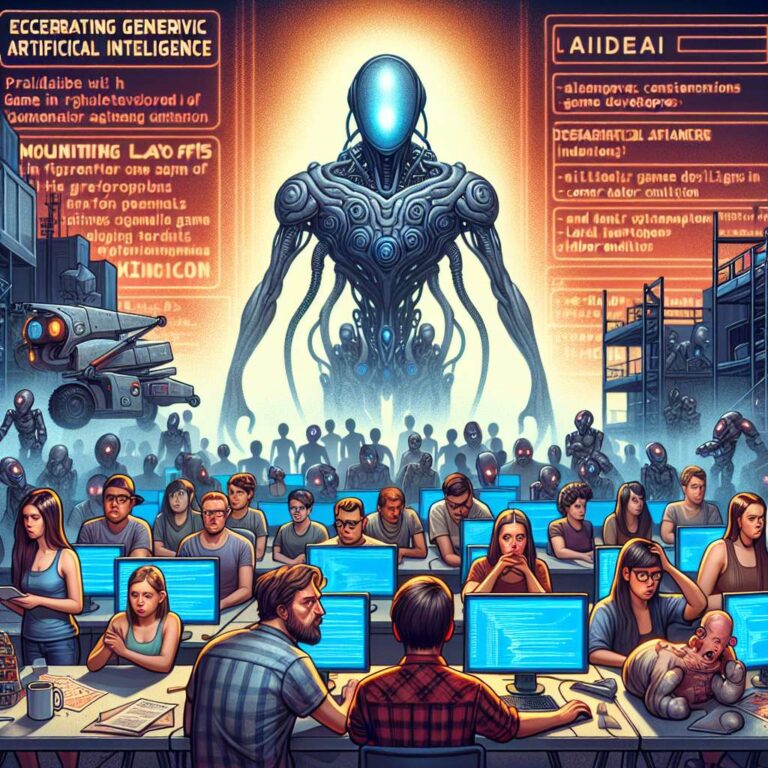
Game developers are reporting worsening labor conditions even as support for collective action grows, according to results from the GDC’s 2024 State of the Industry survey. Respondents say that layoffs have risen by 6% from the same time the year prior, with narrative designers being the hardest hit, and they also report growing use of generative Artificial Intelligence tools in studios despite mounting resistance from workers. Support for unionization is rising in parallel, with 82% of respondents in favor of worker organization and 62% saying they are not in a union but are interested in joining one, signaling a broad appetite for formal labor protections across the industry.
The survey’s findings on generative Artificial Intelligence adoption are underscored by comments from Take-Two Interactive leadership about a strategic pivot toward the technology. Take-Two is ‘actively embracing generative Artificial Intelligence,’ as CEO Strauss Zelnick told investors that he is “actively embracing generative AI” with “hundreds of pilots and implementations across our company,” though he drew a line at using such tools in the development of Grand Theft Auto 6. Zelnick had previously been skeptical of generative Artificial Intelligence, so his new position and the scale of these pilots indicate a significant shift in how one of the largest publishers views content creation and operational workflows.
Hardware plans at Valve are being disrupted by the broader Artificial Intelligence boom, which is driving up component costs and tightening supply. Valve confirmed that the release of its console-style Steam Machine, revealed last November and nicknamed the Gabecube, is effectively being delayed because of component market pressures attributed to Artificial Intelligence demand. Valve wrote that “We planned on being able to share specific pricing and launch dates by now,” but explained that “The limited availability and growing prices of these critical components mean we must revisit our exact shipping schedule and pricing (especially around Steam Machine and Steam Frame),” leaving the timing and final pricing for the new hardware uncertain.