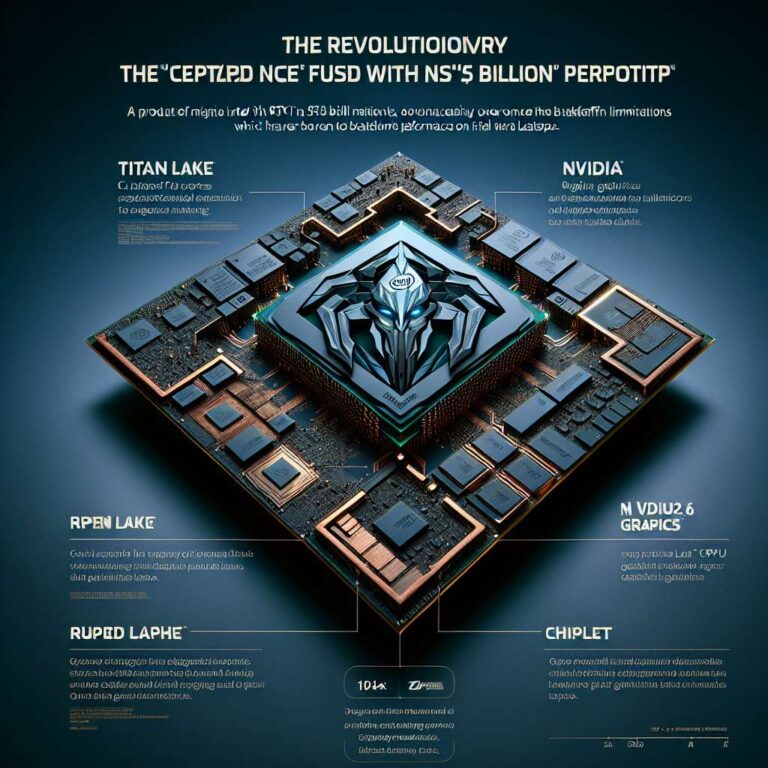
Intel and Nvidia are developing a new laptop chip called Serpent Lake that integrates Intel central processing units and Nvidia graphics units into a single system, according to information leaked by YouTube channel RedGamingTec. The project is the first visible product to emerge from a 5 billion partnership the two companies announced in September, signaling how the collaboration will reach consumer devices. The Serpent Lake design is being positioned as a direct response to Advanced Micro Devices and its Strix Halo processor, which launched earlier this year, and is meant to strengthen Intel and Nvidia’s position in high performance and Artificial Intelligence capable laptops.
The chip is expected to combine Intel’s Titan Lake CPU design with Nvidia’s RTX Rubin graphics chiplets, which will be made using Taiwan Semiconductor Manufacturing Company’s latest 3-nanometer process. A key feature of Serpent Lake is its memory setup, as the chip is expected to support 16 channels of LPDDR6 memory, which is designed to address bandwidth limits that have constrained previous laptop platforms. For example, AMD’s Strix Halo uses LPDDR5X memory with a total bandwidth of up to 256 gigabytes per second (GB/s), and reviewers say that the limit can hurt its graphics speed, while Intel and Nvidia appear to be aiming to avoid that problem. According to the leak, Serpent Lake will use an eight-core performance configuration and sixteen efficient cores that come from Intel’s Griffin Cove and Golden Eagle architectures, and instead of Intel’s usual Arc graphics, the design swaps them for Nvidia’s RTX graphics to target stronger Artificial Intelligence and gaming performance.
The leak also provides more clarity on the broader Intel and Nvidia agreement that runs for multiple years. In September, Nvidia agreed to buy 5 billion worth of Intel shares at 23.28 each, and as part of that deal both companies said they would work together on multiple products that integrate their hardware, including Nvidia’s NVLink technology to move data faster between chips. The Rubin graphics technology being used in Serpent Lake is also expected to appear in data centers in 2026 with high end memory for servers, while the laptop version will be tuned specifically for mobile devices but still use the same chiplet approach. Despite the partnership, Intel has reiterated that it remains committed to its own Arc graphics, and at its October Tech Tour the company confirmed that work is continuing on the next Arc line based on its Xe3P design. For now, Serpent Lake indicates that the two firms are moving joint designs toward real products, with timing that suggests a possible launch in late 2025 or early 2026, depending on development progress.