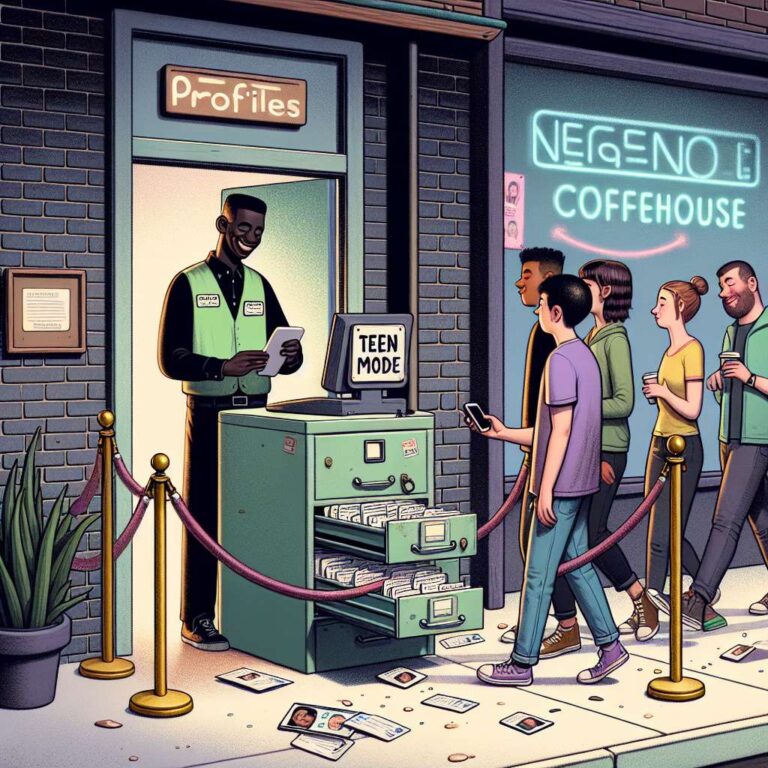
Discord is introducing new teen-by-default safety settings worldwide that will take effect in ‘early March 2026.’ All existing and new Discord accounts will be placed into a ‘teen-appropriate experience’ mode that filters out content deemed inappropriate for minors, and users who want to access age-gated areas will need to complete an age verification process. The company positions the change as a way of ‘giving teens strong protections while allowing verified adults flexibility,’ as it joins other major platforms in tightening access to mature content.
To move out of the teen setting, users will be asked either to upload a scan of a government-issued ID or to scan their faces to verify age, extending a policy already in place in the UK and Australia since 2025 to a global audience. Discord is also deploying an age inference model that will analyze accounts by looking at the types of games users play, the amount of time users spend on Discord, and what time they are active to infer whether they are adults, which may reduce the need for direct verification in some cases. The model-based approach and document checks are meant to work in tandem to separate minors from adults while keeping adult users’ access relatively unrestricted once verified.
Discord states that selfie videos used for age verification never leave the user’s phone and that all facial scan processing is done locally on the device. ID documents are processed by a third party service provider, and Discord says documents are ‘deleted quickly-in most cases, immediately after age confirmation.’ The company discloses that it uses k-ID for age verification, yet even within the short period since the requirement began, there have already been privacy incidents, including a case where up to 70,000 user profiles (emails, names, and other contact information), along with government IDs and credit card information were reportedly accessed by hackers in October 2025. The system closely mirrors an age verification model adopted by Roblox, and early online reaction to Discord’s move has been largely pessimistic, with many users expressing concern over data security and intrusive verification demands.