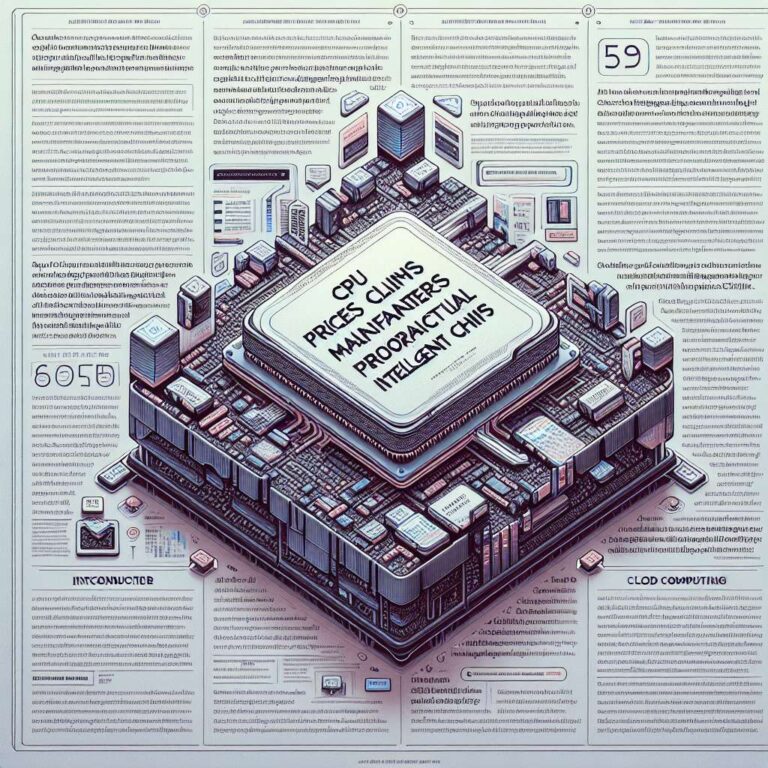
Cpu prices are rising as supply tightens, with Intel and AMD increasing prices across servers and some high-performance consumer products. The shift is being driven by advanced manufacturing capacity moving toward Artificial Intelligence-related chips, which is creating a crowding-out effect for general-purpose processors. Demand for traditional CPUs has not weakened significantly, leaving the market in a position of stable demand but constrained supply and giving manufacturers greater bargaining power.
Capacity allocation has become a central pressure point. Advanced node manufacturers represented by TSMC are prioritizing high-margin Artificial Intelligence chips, resulting in tighter supply for CPUs. Intel’s internal production lines and the foundry network used by AMD are both facing capacity allocation pressure. Manufacturing yields are also an important factor. Yields below normal standards had previously limited Intel’s supply, and stronger future pricing power may favor manufacturers that can deliver better yields and more reliable production output.
The current increase reflects a broader repricing of computing power as Artificial Intelligence adoption expands. Data center demand for high-performance computing resources continues to grow, and while GPUs have displaced CPUs in some workloads, CPUs remain essential for general-purpose computing, edge computing, and enterprise applications. Under a demand structure centered on data centers and cloud computing, customers are placing greater emphasis on performance and stability than on price, allowing chip makers to push through higher prices more easily than during the PC-driven cycle.
The effects are expected to diverge across the technology stack. Upstream chip design companies may see faster margin improvement, while downstream cloud providers and enterprise information technology budgets face rising cost pressure. In cloud computing, these costs are likely to be passed through gradually through service price adjustments, which could raise the cost of Artificial Intelligence applications for end users. If CPU prices continue to rise, companies may accelerate a move toward heterogeneous computing architectures and rely more heavily on GPUs and specialized Artificial Intelligence chips, creating a medium- to long-term substitution risk for CPUs. Macroeconomic uncertainty also remains a constraint, because weaker global recovery could reduce corporate information technology spending and make current price increases harder to sustain.