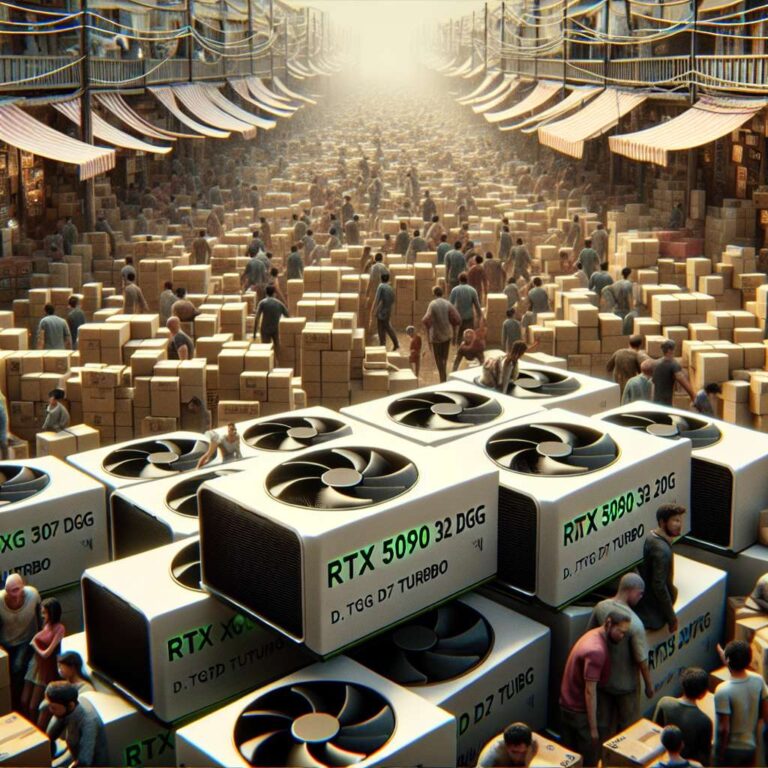
Bootleg GeForce RTX 5090 cards equipped with unconventional blower-style coolers are appearing in significant quantities on Goofish, a Chinese second-hand marketplace managed by Alibaba. While NVIDIA´s board partners typically reserve blower cooling designs for lower-power workstation models, these RTX 5090 cards—rebranded as ´RTX 5090 32G D7 Turbo´—appear to use the high-performance GB202 ´Blackwell´ GPU. The move is linked directly to surging demand from smaller Chinese Artificial Intelligence startups and affluent enthusiasts seeking advanced computing power, even in the face of export restrictions and technology sanctions.
International scrutiny of these cards first rose when the custom GeForce RTX 5090D variant with similar blower cooling was publicized in April. The new ´D7 Turbo´ models, however, seem to leverage even more formidable, non-downgraded RTX 5090 silicon. Recent photos from Goofish reveal large stacks of plain boxes, many bearing misleading labels such as ´NVIDIA RTX 4090 24G AIB BLOWER,´ possibly to evade detection by authorities or circumvent trading platform rules. The upsurge in such listings follows reports that shipments of NVIDIA´s GB202 dies to China have been halted, forcing the market to rely on unauthorized or repurposed hardware.
Industry insiders suggest further downgrades to China-specific RTX 5090D lines may be imminent as a direct result of ongoing export controls, casting doubt on the domestic future of NVIDIA´s high-end Blackwell PRO W product family. Despite mounting evidence of large-scale gray market activity, NVIDIA´s stance has remained muted. According to coverage from VideoCardz and Tom´s Hardware, the company is unlikely to intervene or comment on intricate GPU smuggling operations. This situation underscores the lengths to which some markets will go to secure state-of-the-art computing hardware for Artificial Intelligence applications, revealing the complex interplay of supply, demand, and regulatory enforcement shaping the global GPU ecosystem.