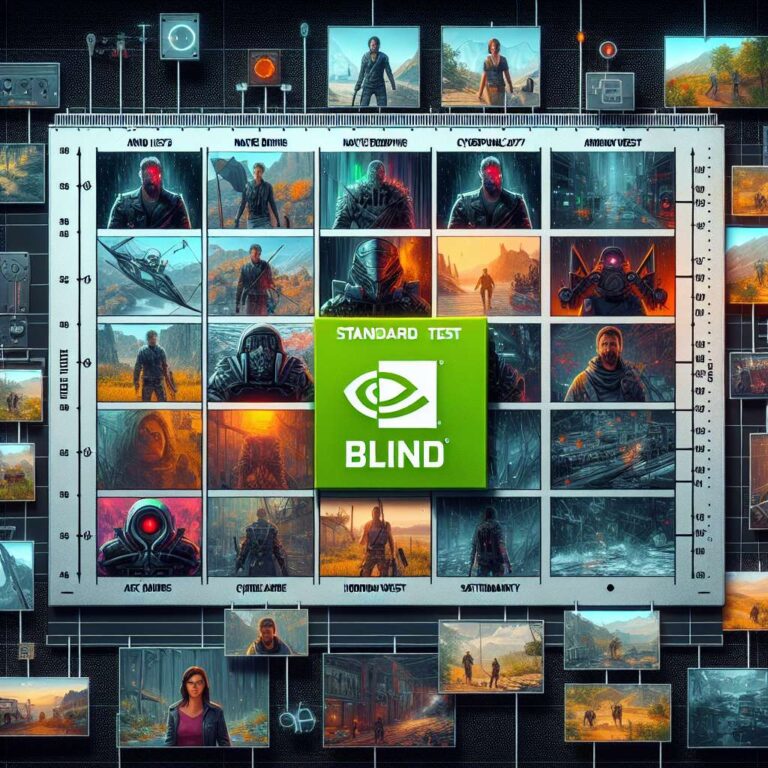
ComputerBase ran a large-scale online blind test in which thousands of gamers voted on their preferred game video output, comparing Nvidia Deep Learning Super Sampling 4.5, AMD FSR Upscaling Artificial Intelligence with FSR 4 on Radeon RX 9000 series GPUs, and native resolution rendering without Artificial Intelligence upscaling. Across all tested scenarios, Nvidia DLSS 4.5 received the highest percentage of votes, indicating a clear preference among participants. The test covered a range of titles including Anno 117, ARC Raiders, Cyberpunk 2077, Horizon Forbidden West, Satisfactory, and The Last of Us Part II, providing a varied set of visual conditions.
To preserve objectivity, the ComputerBase team presented the comparison as fully blind, using videos labeled only with neutral options such as 1/2/3/4, without disclosing which rendering method each clip represented. After two weeks of testing and thousands of votes, the results showed a significant preference for Nvidia DLSS 4.5 in every scenario. Only in Cyberpunk 2077 did native resolution rendering approach parity in user preference, although DLSS 4.5 still maintained a slight lead, underscoring the maturity of the upscaling approach even in visually demanding environments.
Nvidia DLSS 4.5 is based on a second-generation Transformer model that is trained on a much larger dataset of video games, with five times the computational investment of the first DLSS 4 Transformer upscaler. The system uses the FP8 data format, which allows more processing with minimal precision loss while keeping performance efficient. The new algorithm is more context-aware, and Nvidia confirmed that the input for upscaling is used more intelligently, which results in much more detailed and precise video output that many gamers now deem visually superior to both native rendering and rival upscaling solutions.