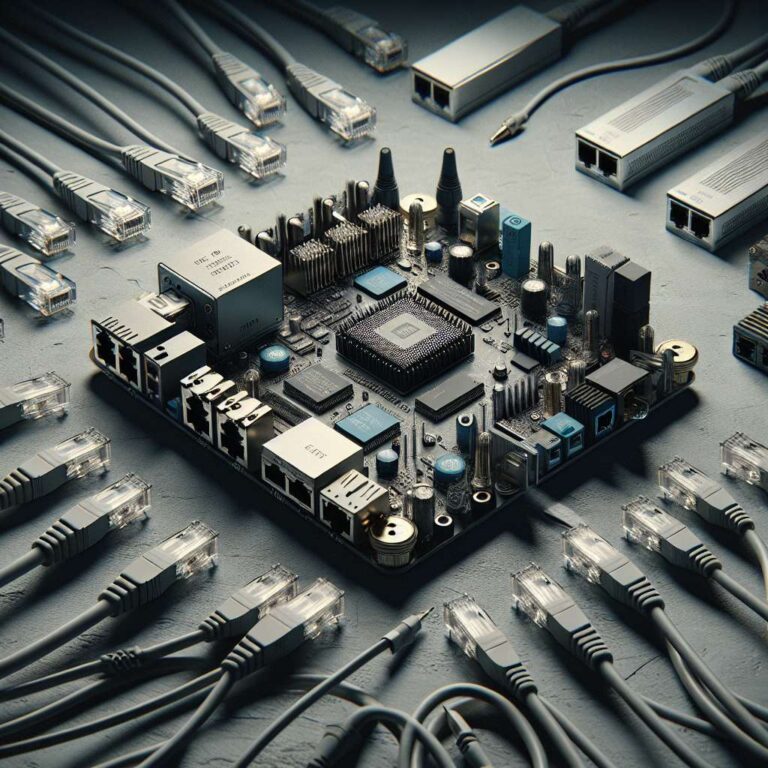
Banana Pi has introduced the BPI-R4 Lite, a compact single-board computer engineered for networking applications. Built around the MediaTek MT7987A system-on-chip, the board features four Arm Cortex-A53 cores, 2 GB of DDR4 memory, and 8 GB of eMMC flash storage. Its connectivity suite targets high-speed use cases, offering a 2.5 Gigabit SFP port and a 2.5 Gigabit RJ45 WAN port—this WAN port also supports Power over Ethernet through an optional module. For routing needs, users benefit from four additional Gigabit Ethernet LAN ports, while storage is extended through a combination of 256 MB SPI-NAND and 32 MB SPI-NOR flash alongside the main eMMC module.
Expansion is a hallmark of the BPI-R4 Lite. It incorporates a mini-PCIe slot with PCIe 3.0 dual-lane capability, making it compatible with the latest Wi-Fi 7 network cards. The M.2 Key-B slot, which supports USB 3.0, enables the addition of 5G cellular modules. An extra mini-PCIe slot provides USB 2.0 connectivity. Notably, the single USB 3.0 port is multiplexed with an HSGMII/SGMII interface, necessitating a choice of function during operation. The device further includes dual 8-pin MikroBUS headers, supporting expansions such as UART, I2C, SPI, and PWM, thereby catering to various custom development tasks or IoT integration.
For power, the BPI-R4 Lite employs a conventional barrel connector. Debugging and console access are available via a USB Type-C interface, making the board accessible for both hobbyists and professional developers. Its impressive specification set positions it as a strong alternative to the Raspberry Pi 5, especially for those seeking a foundation for Wi-Fi 7 routers or network-attached storage setups. Although pricing was not disclosed, the board is expected to be slightly costlier than the Raspberry Pi 5, reflecting its enhanced networking features and expansion flexibility.