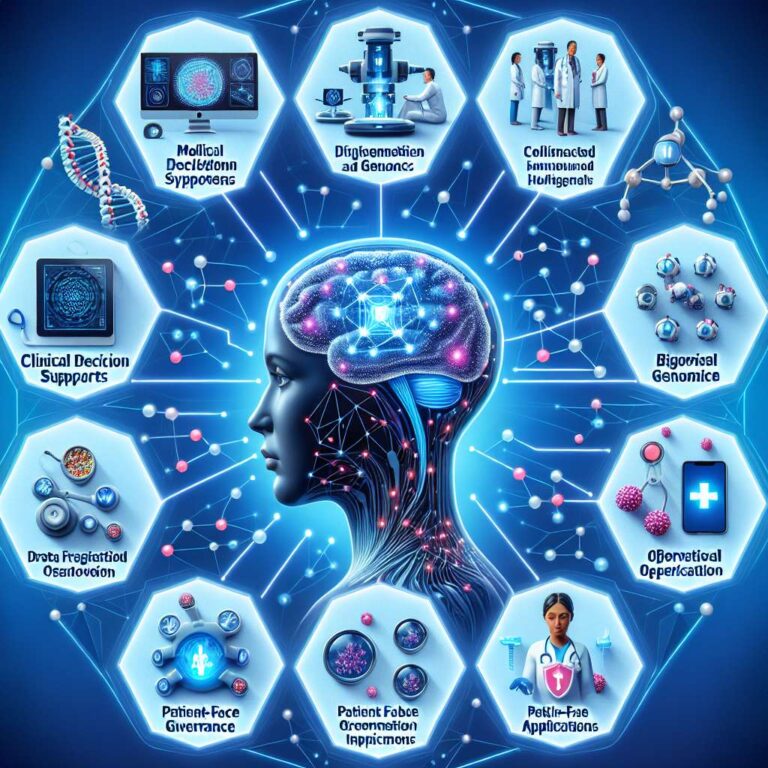
Across 2025, artificial intelligence continued to move from pilots to practice in healthcare, with notable gains in imaging, diagnostics, and clinical workflow. Esaote Group introduced the MyLab C30 cardio portable ultrasound with HeartScan Assistant, which uses artificial intelligence for real-time view classification and image quality guidance to speed cardiac exams and support less experienced clinicians. Research momentum in cancer detection remained strong: a study in The Lancet Digital Health found that using Transpara v.1.7.0 as a second reader in breast screening improved sensitivity by 8.4 percent and identified more interval and future-detected tumors, while researchers in Melbourne reported a rapid artificial intelligence tool that distinguishes malignant from benign skin lesions in minutes. At UC San Diego, a data-efficient image segmentation approach cut labeled data needs by up to 20-fold and delivered 10 to 20 percent performance boosts across multiple tasks.
Clinical decision support and genomics also saw advances. A new artificial intelligence model trained on more than 1 million electronic health records assigns risk scores to over 1,600 rare variants, helping clarify ambiguous genetic tests for conditions such as breast cancer and polycystic kidney disease. In hospitals, Chelsea and Westminster NHS Trust began piloting automated discharge summaries generated from medical records for clinician review, a move intended to speed patient throughput and reduce administrative burden. Additional research highlights include an artificial intelligence system that better predicts kidney transplant rejection risk than traditional methods, and ongoing efforts to predict tumor stemness to guide oncology treatment planning.
In drug discovery and life sciences, Tufts University researchers created artificial intelligence-generated “death portraits” showing how tuberculosis drugs physically damage bacterial cells, a tool that could optimize combination therapies. SandboxAQ released 5.2 million synthetic 3D molecular structures to accelerate artificial intelligence-driven binding predictions. Stanford Medicine unveiled a virtual lab of collaborating artificial intelligence agents that designed nanobody strategies against SARS-CoV-2 variants and produced lab-validated candidates. Meanwhile, Isomorphic Labs said its artificial intelligence-designed drugs are nearing human trials, and DSP-0038, an artificial intelligence-discovered Alzheimer’s candidate, entered Phase I.
Patient-facing innovation expanded globally. Mediwhale’s artificial intelligence platform analyzes retinal images to detect heart, kidney, and eye diseases and is deployed in hospitals in Dubai, Italy, and Malaysia. New artificial intelligence-powered hearing aids in Maine improved speech clarity through real-time sound optimization. Tools for seniors and caregivers advanced with the ElliQ companion for aging in place, Birdie’s conversational wearable for proactive monitoring, and LeggUP’s avatars that deliver personalized behavioral health coaching. Researchers at the University of North Carolina launched a chatbot to provide private, medically reviewed reproductive health information.
Policy and infrastructure shifts tracked the technology’s rise. The Centers for Medicare and Medicaid Services announced the WISeR Model, an artificial intelligence-assisted prior authorization pilot for select outpatient services, with clinicians retaining final authority. Illinois passed the Wellness and Oversight for Psychological Resources Act to bar artificial intelligence from providing therapy or clinical decision-making in mental health settings. The World Health Organization designated a Collaborating Centre on artificial intelligence for health governance at the University of Global Health Equity in Rwanda. Additional ecosystem activity ranged from GHX’s supply chain forecasting capabilities and NBC-reported tools that help patients appeal insurance denials to startups addressing healthcare’s fragmented data and reporting workflows.