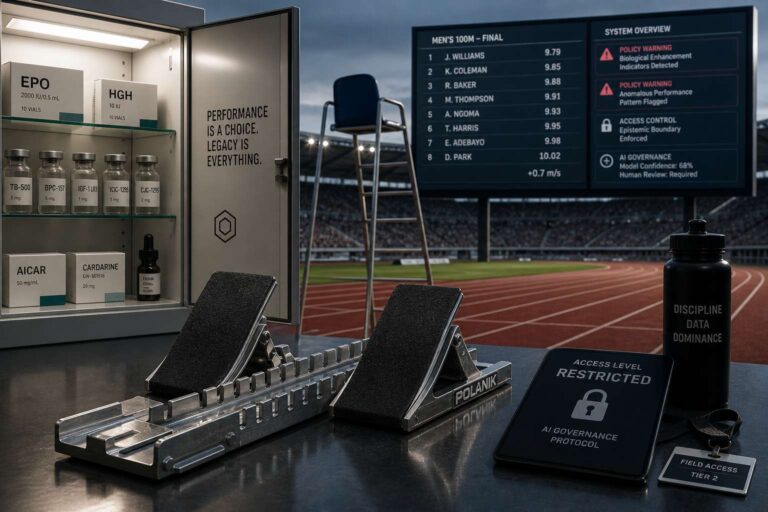
The inaugural Enhanced Games in Las Vegas presented a libertarian thought experiment in sport, with participants encouraged to use performance-enhancing drugs. Supporters framed the event as a glimpse of a future in which medical advances push human performance higher and slow aging. The spectacle raised broader questions about whether such claims are credible and what a drug-permissive model of competition could mean beyond elite athletics.
Artificial Intelligence remained the dominant thread across technology and policy. MIT Technology Review Narrated highlighted that, despite rising alarm over Artificial Intelligence and white-collar work, US labor data shows unemployment in occupations most exposed to Artificial Intelligence is lower than in less-exposed jobs. Anthropic released a “safe” version of Mythos, saying guardrails and user limits make it suitable for release, even after previously claiming the system was too dangerous. Critics suspect the earlier caution may have been marketing, while selective access has become a key strategy for Artificial Intelligence labs.
Lawmakers and companies are also testing the boundaries of Artificial Intelligence deployment. Democratic senators are pushing for military Artificial Intelligence restrictions that would require a human commander to have the final say, even as the idea of keeping humans in the loop during Artificial Intelligence warfare faces skepticism. China has been accused of escalating Artificial Intelligence espionage through hacking campaigns aimed at technology firms. Apple is not launching Siri Artificial Intelligence in the European Union, blaming interoperability requirements, while Brussels says the company did not try to find a compliance path.
Infrastructure and platform policy added to the pressure. Seattle has banned new data centers for a year, becoming the largest US city to pass such a moratorium, despite opposition from Amazon. SpaceX plans to launch space data center tests by late 2027, with orbital compute positioned as central to its growth pitch. China’s new drone rules have unsettled its globally leading drone sector, and a judge cancelled a trial after finding both legal teams used Artificial Intelligence, leaving the case to descend into automated tools arguing against each other.