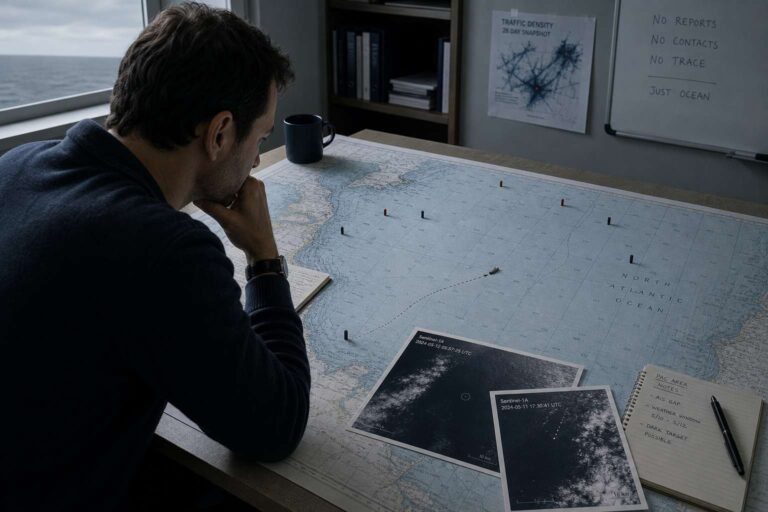
Skylight, the free ocean-monitoring platform built by Seattle’s Allen Institute for Artificial Intelligence, launched Shippy, an Artificial Intelligence agent designed to answer plain-language questions about activity across the world’s oceans. The tool draws on Skylight’s live vessel-tracking and satellite data to help maritime analysts investigate issues such as illegal fishing and vessels that have gone dark. Each answer links back to the underlying records so analysts can verify and reproduce the results.
Skylight is one of a group of environmental projects that moved in 2021 to Allen Institute for Artificial Intelligence from Vulcan Inc., now known as Vale Group, the late Microsoft co-founder Paul Allen’s holding company. Researchers at Skylight have spent years building tools to spot illegal, unreported and unregulated fishing, which it says accounts for billions of dollars in losses each year and hits developing countries that depend on their fisheries the hardest. The platform is free, and Skylight says it is used by more than 300 organizations across about 70 countries.
The system combines free satellite data with commercial imagery and vessel-tracking feeds to flag suspicious behavior, including a ship going dark or two vessels meeting at sea to transfer catch. Allen Institute for Artificial Intelligence has open-sourced the computer-vision models behind the project. Like Skylight itself, Shippy will be free to governments, regional fisheries bodies and qualifying nonprofits.
Access is currently limited to a small group of agencies and partners, with Skylight planning to expand availability as the tool is updated and improved. Built-in limits are intended to keep Shippy accountable: it stays focused on maritime questions, presents facts without making legal judgments, declines defense-related requests, and stops rather than guess when its data cannot support an answer. Operational decisions, such as where to send a patrol, remain with human users.