
Artificial intelligence breakthrough in diagnosing heart disease

Heartflow has become the first FDA-approved Artificial Intelligence algorithm for diagnosing coronary artery disease, offering rapid, near-invasive accuracy and wide clinical adoption across US hospitals.

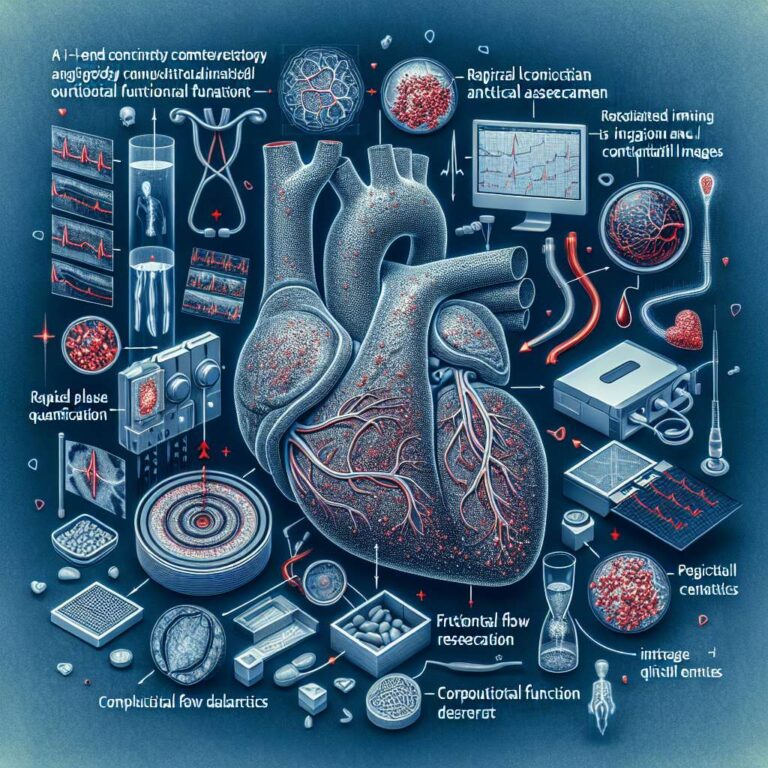
Heartflow has been positioned in the article as the first FDA-approved Artificial Intelligence algorithm for diagnosing cardiac disease, delivering a functional assessment that complements anatomical imaging. The platform ingests coronary computed tomography angiography (CTA) images, constructs a detailed 3D model of the coronary arteries, and applies computational fluid dynamics to produce fractional flow reserve values (FFR_CT) across the coronary tree. The company reports that plaque quantification can be completed in 5-10 minutes after image upload, providing objective, quantitative outputs to help clinicians identify functionally significant stenoses.

Clinical performance and commercial adoption underpin Heartflow’s case. The article cites clinical trials and real-world data showing sensitivity of around 85% to 90% and specificity of around 80% compared with invasive fractional flow reserve. The solution is described as cost-effective at around USD 1,000 per case and is reimbursed by Medicare and most commercial insurers in the US. Credibility for the method is supported by 3,000 peer-reviewed studies and a training library of 110 million annotated CCTA images. As of October 2025, approximately 1,400 of 2,700 US hospitals and outpatient facilities performing CCTA have adopted the Heartflow platform, the article says.

The piece highlights the commercial and investment implications. Heartflow received US FDA approval for its FFR_CT analysis in 2014 and plaque analysis in 2022 and went public on Nasdaq in August 2025. The author frames the company’s per-report, SaaS-like pricing model as a driver of rapid adoption and visible path to operational profitability. Competition is noted, with Cleerly’s ISCHEMIA receiving FDA clearance in 2024 and other firms such as Elucid advancing in the space. Finally, the article positions early detection and prevention enabled by Heartflow’s plaque analysis as a major theme for the digital health investment strategy, arguing that Artificial Intelligence diagnostics could reshape clinical workflows and population health management.
70

Impact Score

Scientists split over the risks of synthetic mirror life

Researchers who once backed mirror-biology research now warn that synthetic mirror organisms could evade immune defenses and spread without natural checks. Others argue the technology remains far beyond current capabilities and say early-stage work could still yield medical benefits.

UK regulators assess Anthropic’s Claude Mythos Preview

UK financial and cyber authorities are urgently assessing the risks tied to Anthropic’s Claude Mythos Preview. The model’s ability to understand and modify software has raised concern that advanced vulnerability discovery could be exploited by criminals.

Artificial Intelligence expands across scientific research

Artificial Intelligence is taking a larger role across biology, chemistry, physics, astronomy, and earth science, with publication volume rising sharply and new scientific infrastructure emerging. Performance gains are notable in narrow tasks, but current systems still struggle to replicate research and complete end-to-end scientific work at expert level.

GCC accelerates Artificial Intelligence strategy

Gulf states are embedding Artificial Intelligence into national economic plans, pairing state-backed investment with new governance frameworks and digital infrastructure projects. The region is positioning itself as a sovereign Artificial Intelligence hub spanning data centers, cloud capacity, and sector-specific deployment.

YMTC expands memory production with new fabs

YMTC is preparing a major manufacturing expansion that would more than double its wafer output and extend its push beyond NAND into DRAM. The company is also increasing its reliance on domestic equipment as trade restrictions continue to shape its supply chain.

Contact Us

Got questions? Use the form to contact us.

Contact Form

Clicking next sends a verification code to your email. After verifying, you can enter your message.