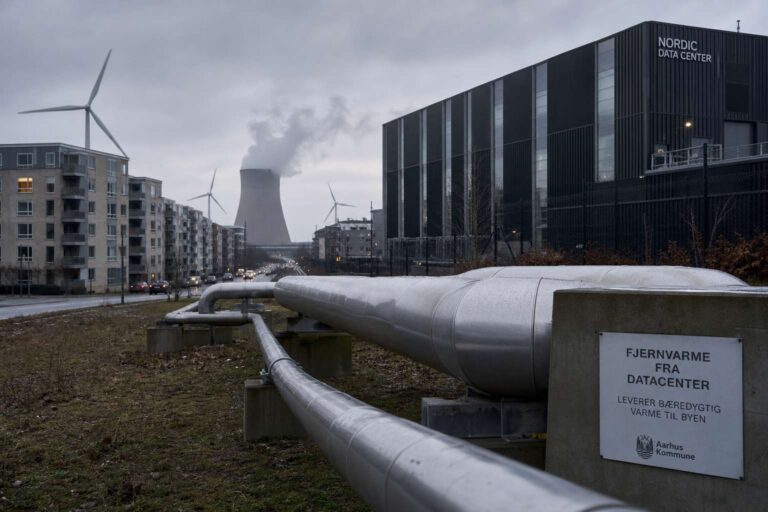
The European Union’s energy chief is drawing clear boundaries for companies looking to expand Artificial Intelligence infrastructure in Europe. EU Energy Commissioner Dan Jørgensen said firms that want to profit from the Artificial Intelligence boom are welcome in the bloc only if they show commitment to Europe’s energy, climate and environmental goals.
That includes supporting renewable and nuclear power instead of fossil fuels, while also recycling excess heat from data centers to warm homes and businesses. The stance reflects growing concern over the resource demands tied to the rapid buildout of facilities needed to run large language models such as ChatGPT, Claude and China’s Doubau.
The Artificial Intelligence boom is creating enormous demand for new data centers, with the U.S. and China leading construction of the facilities needed for powering large language models like ChatGPT, Claude and China’s Doubau. The EU wants to catch up. But these centers require huge amounts of electricity to power them and water to cool them. The burden this places on energy networks and the environment has made the boom controversial, especially in Europe, which has much stricter green rules than the U.S. or China.
Brussels’ message is that expansion of Artificial Intelligence computing capacity cannot come at the expense of decarbonization goals. By tying new data center growth to cleaner energy sources and heat recovery, the EU is attempting to ensure that digital growth supports, rather than undermines, the bloc’s broader transition toward carbon-free power.