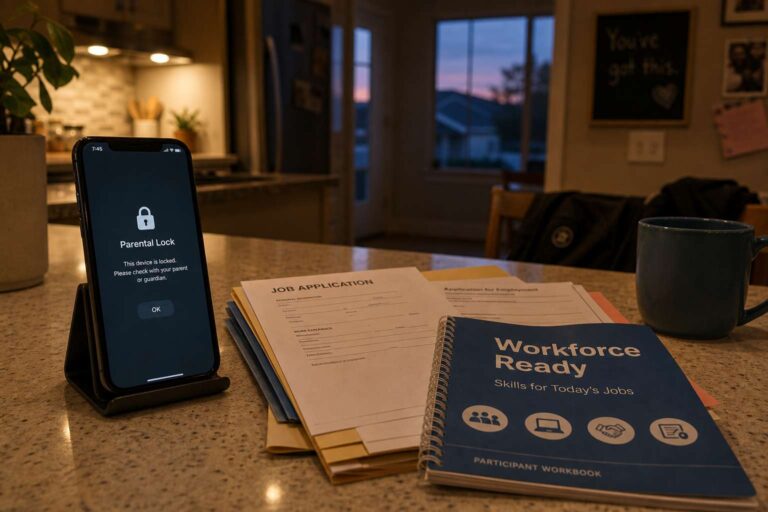
Governor Ned Lamont signed a bipartisan law that combines youth online safety protections, regulations for Artificial Intelligence, and workforce development measures aimed at preparing Connecticut residents for a more technology-driven economy. The legislation, Public Act 26-15, was developed with Attorney General William Tong and State Senator James Maroney and was framed as a state-level response to a lack of federal action. State officials presented the measure as an effort to balance consumer protection, worker fairness, and continued innovation.
The law creates new requirements for social media platforms serving minors. Social media companies must verify a user’s age and, if the user is a minor, receive permission from the minor’s parent or legal guardian to access addictive algorithmic feed. These apps also cannot send minors notifications between 9:00 p.m. and 8:00 a.m. Platforms must make the default setting, among others, one that limits the minor’s access to any portion of the platform that uses a personalized algorithm to one hour per day. Each of the established default protections can be modified or removed with permission from the minor’s parent or legal guardian. Companies are also required to annually disclose information from the previous calendar year, including statistics on users who obtained parental or guardian consent, used default settings, and the average amount of time users spent on the platform.
The measure also adds several protections around Artificial Intelligence systems. Artificial Intelligence chatbot operators are required to make reasonable efforts to detect suicidal ideations or indicators of self-harm expressed by users and to maintain a protocol for responding with appropriate resources. The law also requires employment-related disclosures when Artificial Intelligence is used to make hiring and workplace decisions, reflecting concerns about bias and the effect of automated decision-making on workers’ careers.
Connecticut also paired regulation with economic and workforce initiatives. The legislation supports training and information programs for nonprofits and small businesses to improve Artificial Intelligence literacy and help organizations use new tools more effectively. Partnerships involving the Connecticut Department of Housing, Connecticut Department of Labor, and the Secretary of the State are intended to connect residents to the Artificial Intelligence Academy, which will provide skills for the modern workplace. The bill also establishes an Artificial Intelligence regulatory sandbox program designed to support development and collaboration under regulatory oversight, alongside broader efforts to modernize state government and encourage safe, innovative uses of Artificial Intelligence.