
Artificial Intelligence artist Xania Monet debuts on Adult R&B Airplay

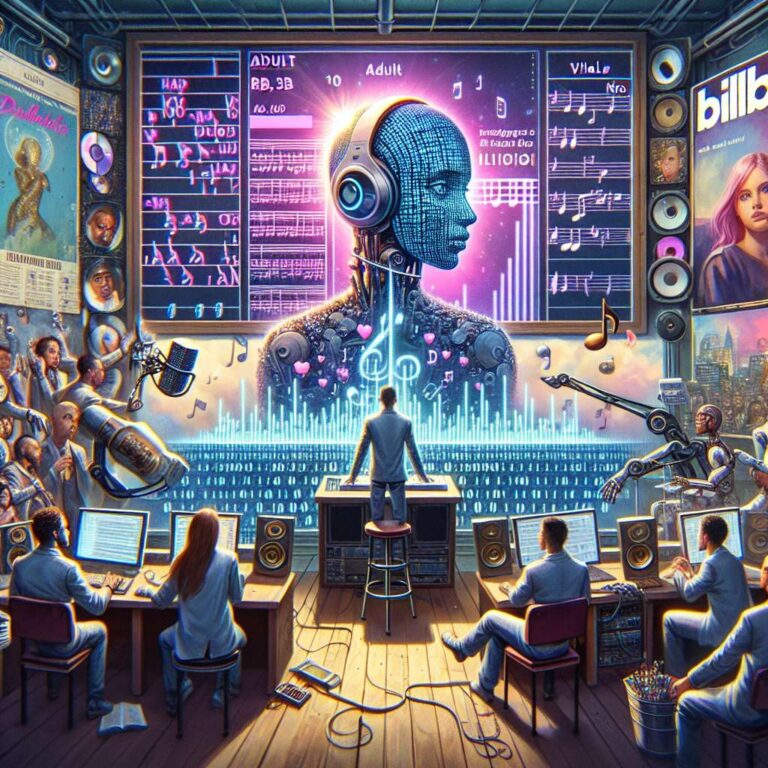
Xania Monet’s “How Was I Supposed to Know?” entered Billboard’s Adult R&B Airplay chart at No. 30, marking the first known instance of an Artificial Intelligence based act appearing on a Billboard radio survey. The song’s radio arrival follows viral social growth and previous sales and streaming chart success.

Xania Monet, an Artificial Intelligence driven act created by poet Telisha Jones, made a first for Billboard this week when her song “How Was I Supposed to Know?” debuted at No. 30 on the Adult R&B Airplay chart dated Nov. 1. Billboard reports the song improved by 28 percent in plays during the Oct. 17-23 tracking week compared with Oct. 10-16, according to Luminate. Mediabase counted plays from 15 of the chart contributing adult R&B stations in that tracking window among 57 total reporters.

The track first gained traction on TikTok and other social platforms, which translated into streaming and sales activity. That momentum produced a No. 1 debut on the R&B Digital Song Sales chart dated Sept. 20 and a No. 20 start on the multimetric Hot R&B Songs chart a week later. As awareness spread, the project sparked both support and criticism from established artists and observers, with SZA and Kehlani named among prominent opponents in the public discourse around the release.

Members of Monet’s team view radio promotion as central to the campaign. Romel Murphy, who manages Monet, said the strategy includes a full radio push and described radio exposure as a way to bring the music to as many people as possible while aiming to climb to No. 1. Billboard reached out to multiple stations’ programming and music directors for comment on the song and the surrounding conversations but reported that none replied.

The chart appearance also underscores a broader trend of Artificial Intelligence driven acts beginning to appear across Billboard rankings. Several such acts have shown up on the Emerging Artists chart and other lists in recent weeks, illustrating how tools and creators are interacting with the music industry and prompting debates about ethics, promotion and creative credit. Monet’s radio milestone represents another tangible example of that evolving relationship between technology and music business practice.
50

Impact Score

Artificial Intelligence expands across scientific research

Artificial Intelligence is taking a larger role across biology, chemistry, physics, astronomy, and earth science, with publication volume rising sharply and new scientific infrastructure emerging. Performance gains are notable in narrow tasks, but current systems still struggle to replicate research and complete end-to-end scientific work at expert level.

GCC accelerates Artificial Intelligence strategy

Gulf states are embedding Artificial Intelligence into national economic plans, pairing state-backed investment with new governance frameworks and digital infrastructure projects. The region is positioning itself as a sovereign Artificial Intelligence hub spanning data centers, cloud capacity, and sector-specific deployment.

YMTC expands memory production with new fabs

YMTC is preparing a major manufacturing expansion that would more than double its wafer output and extend its push beyond NAND into DRAM. The company is also increasing its reliance on domestic equipment as trade restrictions continue to shape its supply chain.

Ex Parte Desjardins reshapes Artificial Intelligence patent eligibility

A precedential PTAB decision and two USPTO memoranda have clarified how Artificial Intelligence inventions can qualify for patent protection under 35 U.S.C. § 101. The guidance gives applicants a clearer path to showing technical improvements in machine learning systems and computer performance.

Contact Us

Got questions? Use the form to contact us.

Contact Form

Clicking next sends a verification code to your email. After verifying, you can enter your message.