
NVIDIA Showcases Latest Advances in Physical AI for Robotics

NVIDIA highlights new advancements in Physical Artificial Intelligence for smarter, autonomous robotics.

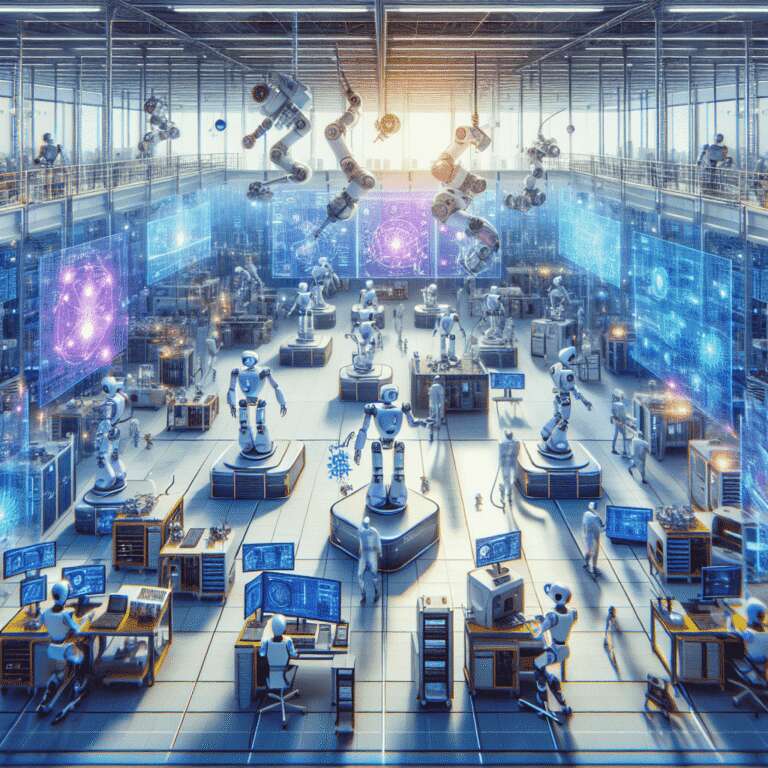
This National Robotics Week, NVIDIA is putting the spotlight on groundbreaking technologies that are shaping the future of intelligent machines. These advancements are driving progress across multiple sectors, including manufacturing, healthcare, and logistics, as machines gain the ability to operate with greater autonomy and intelligence.

Key innovations include advancements in robotics simulation and robot learning, powered by emerging world foundation models. These technologies are pivotal in creating AI-enabled robots capable of adapting to rapidly changing and complex environments, facilitating a significant shift within the industry.

NVIDIA´s platforms, such as the NVIDIA GR00T N1, Isaac Sim, and Isaac Lab, offer robust frameworks for robot simulation, training, and synthetic data generation. These resources arm developers and researchers with the tools needed to innovate and push the boundaries of what robots can achieve, promoting advancements across diverse industries throughout the week.
75

Impact Score

Artificial Intelligence platform choice becomes a board decision

Competition among leading Artificial Intelligence providers is shifting from model benchmarks to control of broader platforms and ecosystems. That change turns large language model selection into a long term strategic decision for boards, not just engineering teams.

Memory makers see shortages easing in late 2028

Memory manufacturers expect shortages to continue until the end of 2028, with supply and demand returning to balance afterward. Producers are also reassessing whether to extend capacity expansion beyond plans already tied to current demand.

EuroHPC JU signs contract for Artificial Intelligence supercomputer HammerHAI

EuroHPC JU has signed a contract with HPE to deploy HammerHAI, the first new standalone supercomputer under its Artificial Intelligence Factories initiative. The system is planned for HLRS in Germany and is designed to expand computing capacity for Artificial Intelligence, machine learning, and data science.

MSI warns of gpu shortages and expands ddr4 output

MSI says tightening component supply tied to Artificial Intelligence demand is pressuring gaming hardware pricing and availability. The company is also shifting motherboard production toward DDR4 as DDR5 shortages persist.

NVIDIA launches BlueField-4 STX storage architecture

NVIDIA introduced BlueField-4 STX, a modular storage reference architecture built to support long-context reasoning for agentic Artificial Intelligence. The design aims to keep data close to compute and improve responsiveness across inference, training and analytics.

Contact Us

Got questions? Use the form to contact us.

Contact Form

Clicking next sends a verification code to your email. After verifying, you can enter your message.