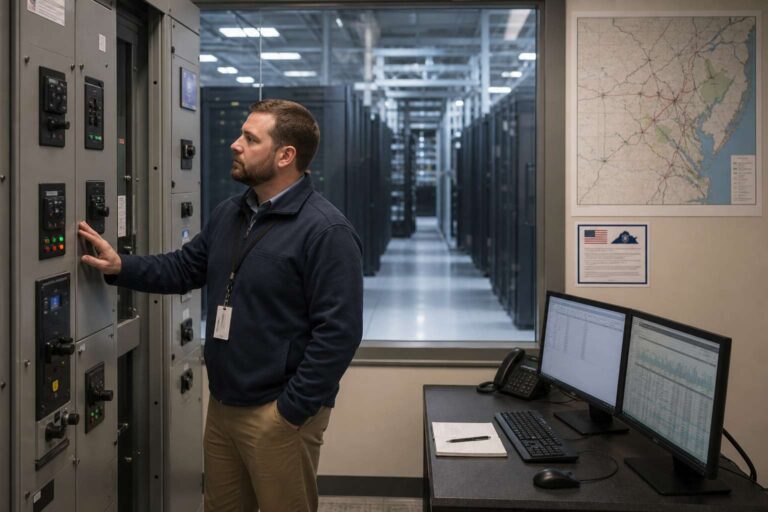
Emerald AI is preparing to deploy its Conductor software at a new facility in Virginia’s Data Center Alley, with partners including Nvidia and Digital Realty. The system is designed to reduce a data center’s power draw when grid demand spikes while preserving the most urgent computing work, a model its backers describe as a “power-flexible AI factory.”
The push reflects a broader effort to fit data centers into existing electricity systems rather than waiting years for new power plants and transmission. Studies cited in the sector suggest major gains from limited flexibility: a 2025 Duke University report found the US grid could support an additional 76 gigawatts if facilities reduced usage just 0.25% of the time, or about 22 hours a year. In Oregon, Aligned Data Centers plans to install a 31-megawatt battery in May 2027, helping Portland General Electric offer 80 megawatts of added capacity without new power plants.
Conductor has moved from simulations to increasingly demanding tests, including control of server racks with 256 Nvidia A100 GPUs and a 25% power reduction for three hours. Its largest trial is planned in Manassas, where it will manage a 96-megawatt hyperscale AI factory on a live grid. Supporters say flexibility can improve reliability and speed interconnection, while skeptics argue it remains an optimization tool, not a substitute for expanding generation, transmission and distribution.