Yann LeCun, a Turing Award recipient and longtime leading researcher in artificial intelligence, has launched a new company called Advanced Machine Intelligence after stepping down as chief scientist of Meta’s Fundamental AI Research lab. He argues that the industry’s current fixation on large language models is misguided and that these systems will not deliver human-level intelligence or solve the hardest problems in artificial intelligence. His new venture is centered on world models, a different class of artificial intelligence systems designed to capture the dynamics of the real world, and will be headquartered in Paris as a global company intended to offer an alternative to the current United States and China dominated landscape.
LeCun positions Advanced Machine Intelligence as a frontier artificial intelligence company that is both open-source and geopolitically independent, addressing sovereignty concerns for countries that want more control over their artificial intelligence infrastructure. He criticizes leading United States based labs such as OpenAI and Anthropic for moving toward secrecy while noting that China has embraced open-source artificial intelligence, leading academia and startups outside the United States to adopt Chinese models. LeCun worries about a future in which people must choose between proprietary English-speaking systems tied closely to the United States and open-source Chinese systems with politically constrained outputs, and he argues for widely fine-tunable models that can support a diverse ecosystem of artificial intelligence assistance analogous to a pluralistic press.
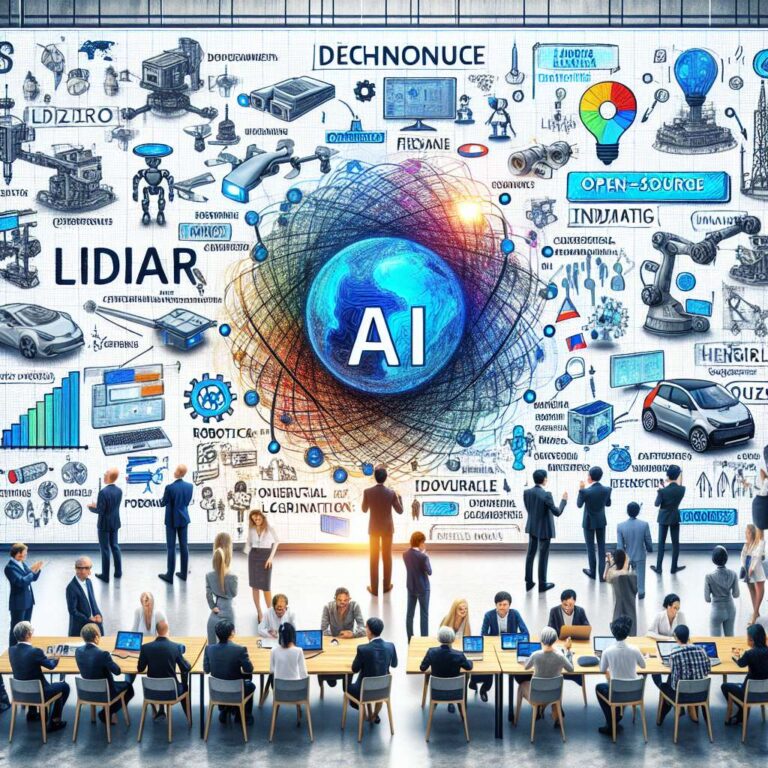
Technically, LeCun contends that large language models are powerful for manipulating text and assisting with writing and coding, but he believes they cannot simply be scaled into human-level intelligence because they lack grounded understanding, world models, and the ability to predict the consequences of actions. He points to his joint embedding predictive architecture, which he describes as not generative artificial intelligence but a framework that learns abstract representations from video and other non-text data to capture the underlying rules of the world, as a foundation for common sense and planning in physical environments. Advanced Machine Intelligence intends to train systems on video, audio, and sensor data drawn from sources such as robots, lidar, and industrial equipment, with applications ranging from holistic modeling of complex industrial processes to smart glasses and reliable agentic systems that can enable domestic robots and Level 5 autonomous driving. LeCun maintains that this kind of long-term research, much of it currently driven by academia, represents the true next frontier of artificial intelligence, while large language models have become an industrial product area where further scaling will not deliver the necessary conceptual breakthroughs.
LeCun’s critique extends to the current humanoid robotics wave, where he says impressive demonstrations often rely on preplanned behaviors and enormous tele-operation datasets that fail to generalize when environments change, revealing a missing core understanding of the physical world. He argues that just as a 17-year-old can learn to drive in 20 hours because of a rich prior model of how the world works, truly useful robots will require strong world models and better planning algorithms. Organizationally, he will serve as executive chairman of Advanced Machine Intelligence while remaining a professor at New York University, leaving day-to-day leadership to chief executive Alex LeBrun, a serial entrepreneur and former Meta colleague. The startup plans offices beyond Paris, including in North America and likely Asia, and LeCun says recruiting has been easy because many researchers believe the future of artificial intelligence lies in world models, with early hires already coming from OpenAI, Google DeepMind, and xAI. He hints that more details about the company’s financial backing and core team will be shared soon and suggests that Meta itself could become one of the new venture’s first customers, since its work on physical world models does not directly compete with Meta’s focus on generative artificial intelligence and large language models.