
US Department of Labor outlines Artificial Intelligence literacy framework

The US Department of Labor has released an Artificial Intelligence literacy framework that identifies core content areas and delivery principles intended to guide nationwide workforce and education efforts.

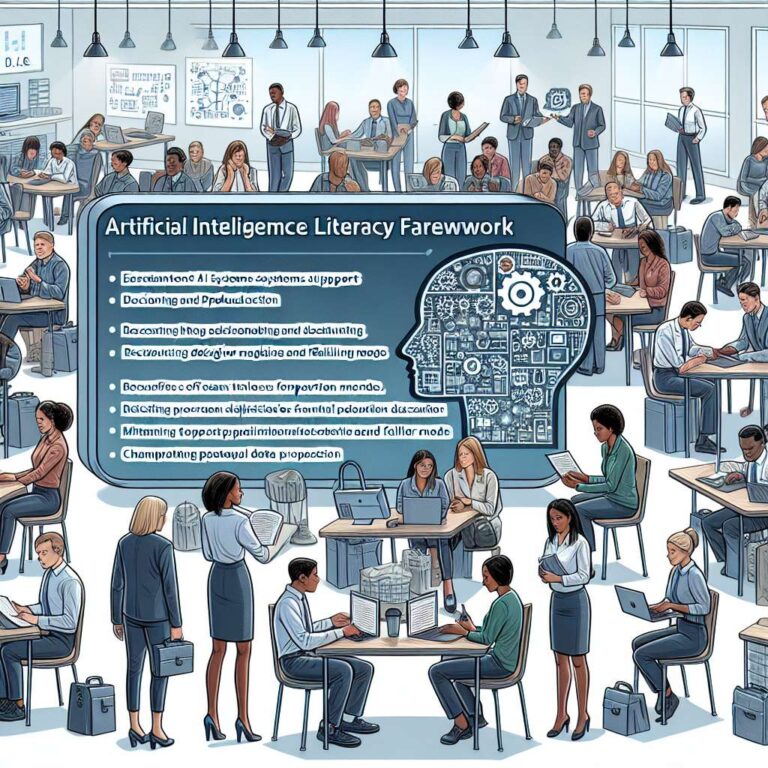
The US Department of Labor has introduced an Artificial Intelligence literacy framework aimed at supporting workers, educators, and training providers as Artificial Intelligence tools become more prevalent across industries. The framework defines foundational knowledge areas that individuals should understand in order to engage with Artificial Intelligence systems in the workplace, including what these technologies are, how they function at a basic level, and where they are being applied in everyday jobs. It emphasizes practical understanding of how Artificial Intelligence is used to support decision making and productivity, as well as awareness of its limitations.

The framework also highlights delivery principles intended to shape how Artificial Intelligence literacy is taught and implemented nationwide. These principles focus on making learning accessible to diverse populations, integrating Artificial Intelligence concepts into existing education and training programs, and ensuring that instruction remains relevant as technologies evolve. Guidance is aimed at schools, workforce boards, unions, employers, and community organizations so they can incorporate Artificial Intelligence literacy into curricula, apprenticeships, and upskilling initiatives without requiring learners to become technical specialists.

In addition to core content and delivery guidance, the Department positions the Artificial Intelligence literacy framework as a tool to promote worker empowerment and responsible technology adoption. The document encourages programs that help workers understand issues such as transparency, data use, privacy, and potential bias in Artificial Intelligence systems so they can ask informed questions and participate in workplace decisions about technology. By setting out a common foundation for Artificial Intelligence literacy, the Department seeks to align national efforts, reduce fragmentation in training approaches, and support equitable access to the benefits of emerging technologies across regions and sectors.
55

Impact Score

Tesla plans terafab for Artificial Intelligence chips

Tesla is moving toward a large-scale chip manufacturing project to support its autonomous driving roadmap. Elon Musk said the terafab effort for Artificial Intelligence chips will launch in seven days and may involve Intel, TSMC and Samsung.

Timeline traces evolution, civilisation and planetary stewardship

A sweeping chronology links cosmology, evolution, human history and modern environmental risk in a single long view of the human condition. The sequence culminates in contemporary debates over climate change, biodiversity loss and artificial intelligence governance.

Wolters Kluwer report tracks Artificial Intelligence shift in legal work

Wolters Kluwer’s 2026 Future Ready Lawyer findings show Artificial Intelligence has become a foundational tool across law firms and corporate legal departments. The survey points to measurable time savings, revenue growth, and rising pressure to strengthen training, ethics, and security.

Anthropic March 2026 release roundup

Anthropic rolled out a broad set of March 2026 updates across Claude Code, the Claude Developer Platform, Claude apps, and enterprise partnerships. Changes focused on larger context windows, workflow improvements, reliability fixes, visual output features, and new partner enablement programs.

China renews push to lead in technology and Artificial Intelligence

China’s 15th five-year plan elevates science and technology as core national priorities, with a strong emphasis on self-reliance and Artificial Intelligence. The blueprint signals heavier investment, broader industrial support, and a more confident bid to shape global technology standards.

Contact Us

Got questions? Use the form to contact us.

Contact Form

Clicking next sends a verification code to your email. After verifying, you can enter your message.