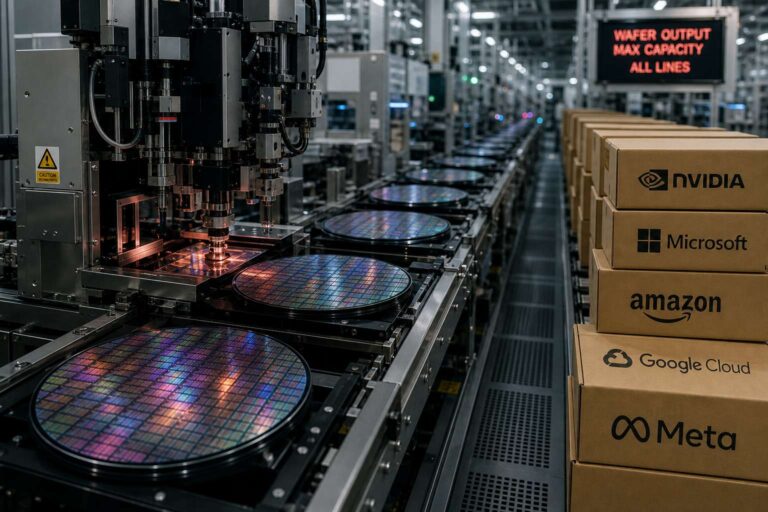
TSMC posted a 30 percent rise in May revenue to NT$416.98bn (roughly 11 billion euros), driven by sustained Artificial Intelligence chip demand. Combined April and May sales are up around 24 percent year-on-year. The result reflects continued demand for Artificial Intelligence chips from customers including Nvidia and AMD, with analysts watching whether TSMC can keep extending its recent run of growth.
Analysts are watching closely: the consensus expectation is for a 35 percent increase in second-quarter sales. TSMC already delivered a record Q1 2026 result, its fourth consecutive record quarter, with first-quarter revenue rising 35 percent year-on-year. Earlier this month, CEO CC Wei told shareholders that global chip supply will fall short of demand for years to come. That view aligns with remarks from Nvidia CEO Jensen Huang, who said just days before that his company remains supply constrained.
The supply squeeze is a balancing act for parts of the chip supply chain. TSMC is deliberately avoiding sharp price increases despite the demand pressure, opting instead for long-term customer relationships and predictable growth. Broadcom flagged earlier this year that TSMC’s production lines are under visible pressure, with delays set to affect supply chains in 2026. Intel, long considered irrelevant as a foundry for top-end chips, is appearing as a potential second source for the likes of Nvidia and Apple.
Alphabet, Amazon, Meta, and Microsoft are collectively preparing to set aside $725bn for Artificial Intelligence-related investments this year, significantly more than previously anticipated. In April, TSMC raised its full-year sales guidance to over 30 percent growth and said capital spending should trend toward the upper end of a forecast range of as much as $56bn for 2026. TSMC also unveiled new chip manufacturing nodes in April, including the A13 node targeting Artificial Intelligence chips in 2029.
TSMC’s exposure is not limited to Artificial Intelligence. The chipmaker also serves smartphone and consumer electronics manufacturers, which are dealing with soaring memory chip costs and consumers affected by rising costs of living. Those markets could help fill part of the potential gap if Artificial Intelligence demand weakened, but no clear threat to current growth is visible for now.