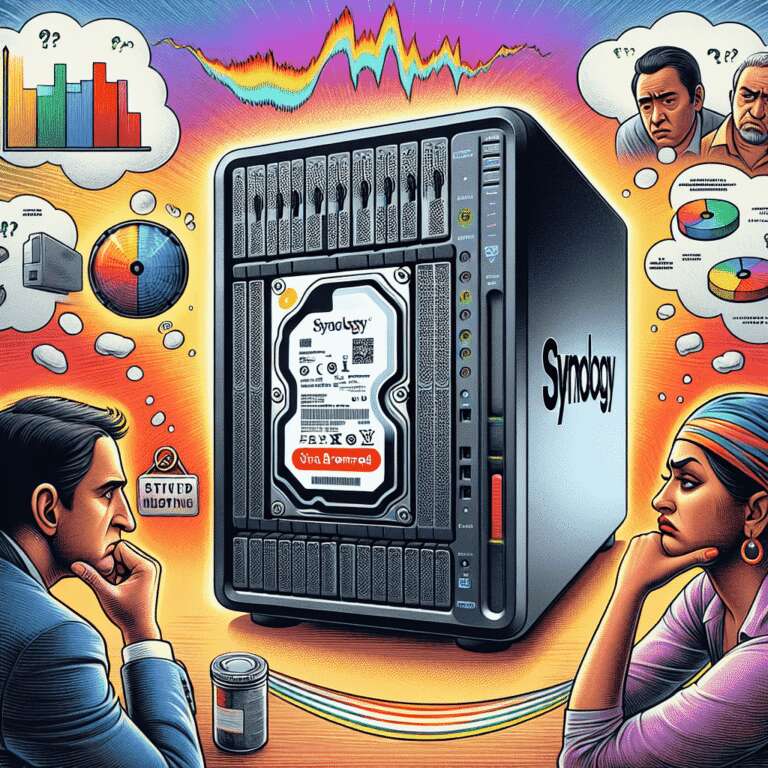
Synology has announced a significant policy change for its popular Plus Series NAS devices, beginning with models released in 2025. According to a recent press release on Synology’s European website, new customers purchasing these appliances will need to use Synology’s own branded hard drives in order to utilize essential NAS functions, such as creating storage pools and performing lifespan analyses. Advanced features, including volume-wide deduplication, will also be locked unless Synology hard drives are installed. Previously, this restriction was limited to Synology’s higher-end XS Plus and rack-mounted NAS offerings.
This adjustment will not impact current device owners, as the restrictions will apply only to new product SKUs released from 2025 onward; existing units will retain compatibility with third-party hard drives. A key controversy is Synology’s lack of in-house HDD manufacturing: reports from Arstechnica indicate that Synology’s branded drives are re-badged Toshiba models, sold at a noticeable markup over equivalent Toshiba-branded hardware. The premium is especially pronounced for higher-capacity tier drives, raising concerns about increased costs for both home and business users.
While the initial rollout is confined to Europe, experts believe such hardware-based ecosystem lock-ins are likely to expand globally, as vendor-restricted ecosystems are seldom limited to a single region. Synology defends the move by citing improved compatibility and customer experience, but reaction from existing and prospective clients has been mostly critical, with many expressing frustration over being forced to pay more for hardware that previously operated without restriction. The development signals a tightening approach to aftermarket hardware use in the network-attached storage industry and could set a precedent for further vendor lock-in policies in the consumer electronics sector.