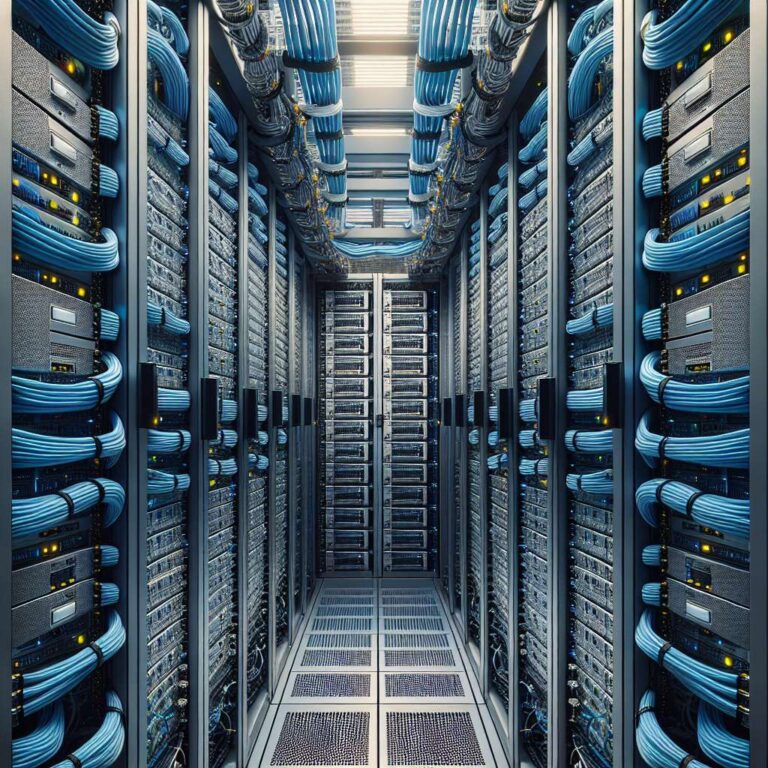
Supermicro announced an expansion of its NVIDIA Blackwell system portfolio that includes a 4U DLC-2 liquid-cooled NVIDIA HGX B200 platform now ready for volume shipment and a newly introduced 8U air-cooled front I/O system. both platforms are positioned for heavy-duty workloads, specifically large-scale artificial intelligence training and cloud-scale inference, and are intended to simplify deployment, management, and maintenance across air- and liquid-cooled data center environments.
The new systems are engineered to provide easier front I/O access, which reduces cabling complexity and helps improve serviceability in dense racks. they are also designed to support upcoming NVIDIA HGX B300 platforms, giving customers a migration path as NVIDIA updates its accelerator lineup. by focusing on thermal efficiency and compute density, Supermicro aims to lower operational expenses through reduced power and cooling costs while increasing racks´ usable compute per unit footprint.
Supermicro emphasized modularity and configurability with its building block architecture, allowing customers to tailor systems to specific workload profiles and site cooling capabilities. the 4U DLC-2 liquid-cooled HGX B200 is highlighted for power savings and faster time to online for ´AI Factory´ style deployments, where speed of integration and energy efficiency are critical. the 8U air-cooled front I/O option offers an alternative for facilities that cannot adopt liquid cooling immediately but still require high-density, front-serviceable designs.
Charles Liang, CEO and president of Supermicro, framed the moves as broadening the company´s ability to deliver precisely optimized NVIDIA Blackwell solutions across varied infrastructure environments. the announcement underscores a trend among vendors to offer both liquid- and air-cooled options to match diverse data center constraints and business objectives, providing customers with choices that balance upfront integration time, ongoing power and cooling costs, and long-term scalability.