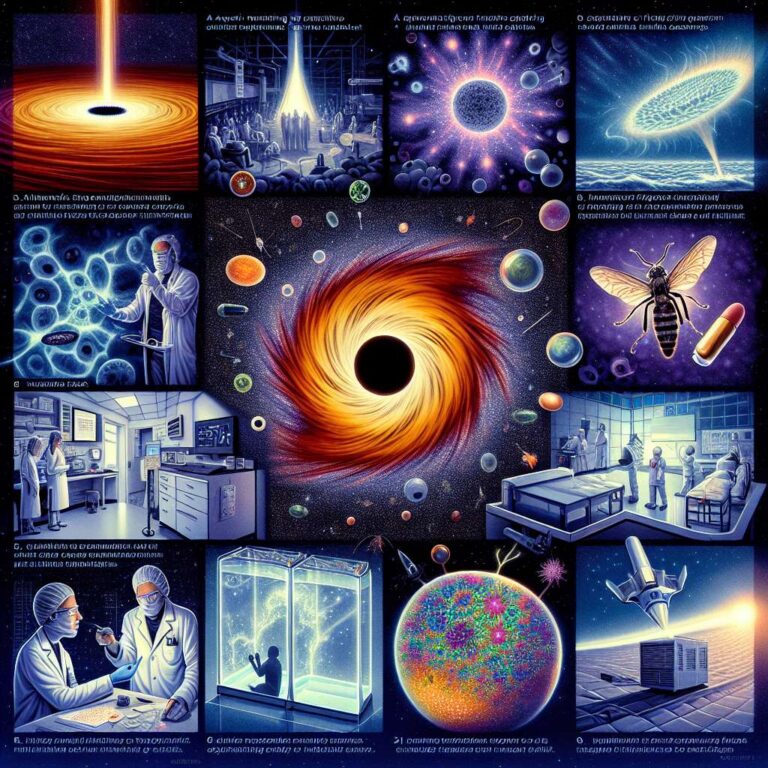
Caltech astronomers have recorded what may be the most powerful cosmic event ever observed: a supermassive black hole violently consuming a star roughly 30 times the mass of our sun. The flare, described as emitting the power of 10 trillion suns, was detected from about 10 billion light-years away and has persisted for more than seven years, offering a rare long-term look at extreme accretion and stellar disruption.
The newsletter highlights several laboratory and applied breakthroughs. Researchers at Maynooth University report an electrochemical technique that recovers fingerprints from fired bullet casings using mild voltage and non-toxic polymers; the method reportedly reveals ridges on casings up to 16 months old and could help link ammunition directly to suspects. In energy research, a team at Nanjing University built a floating water-integrated droplet electricity generator that uses the water itself as an electrode, cutting device weight by about 80 percent and reducing costs by roughly half while converting raindrops into power for potential off-grid or complementary use with solar and wind.
Biotech and public health items include a genetically modified Metarhizium fungus engineered to emit longifolene, a scent that attracts mosquitoes; lab tests killed 90 to 100 percent of mosquitoes by luring and infecting them, suggesting a new vector-control approach that may avoid resistance. Other promising advances noted are a protein-based gel that mimics enamel-forming proteins to rebuild tooth enamel, AquaWomb’s incubator-style system for extremely premature infants, and a reformulation of the chemotherapy agent 5-fluorouracil that increases cellular uptake by 12.5 times in preclinical tests.
The issue also rounds up consumer and industry items: new gadgets such as the Sandbar smart ring, Whoop MG medical-grade tracker, Dreame S1 water purifier, and Nuwa Pen; a You.com guide to measuring Artificial Intelligence return on investment; and Vanta’s State of Trust report, which surveyed 3,500 leaders and found 59 percent say Artificial Intelligence risks outpace security expertise. Together, the stories sketch a week of wide-ranging advances across astronomy, forensics, energy, biotech, and tooling for enterprise Artificial Intelligence adoption.