
Sifive integrates Nvidia Nvlink Fusion for next gen risc v artificial intelligence data centers

Sifive is integrating Nvidia Nvlink Fusion into its high performance risc v data center solutions to support tightly coupled artificial intelligence systems that prioritize performance per watt and data movement efficiency.

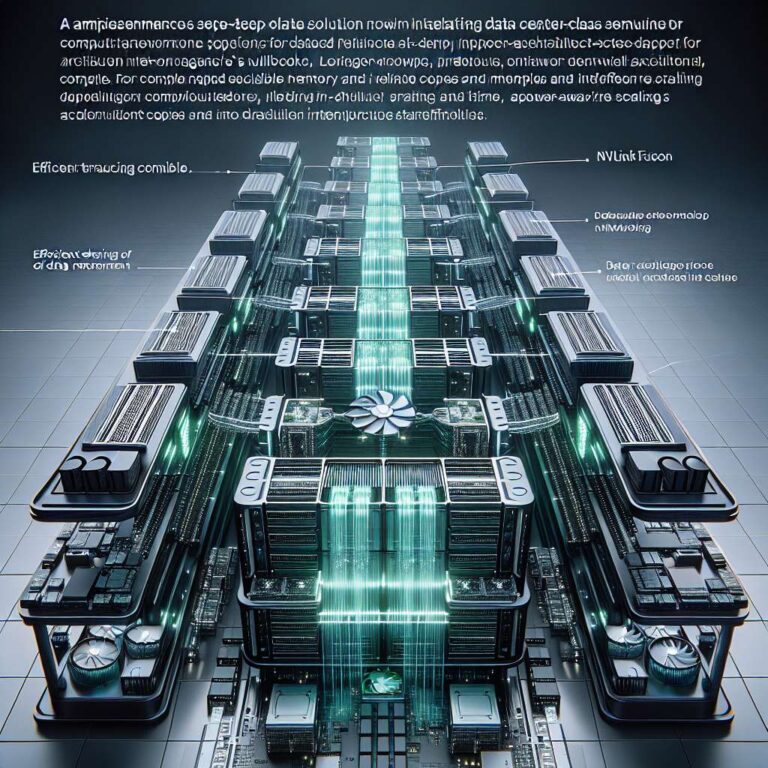
Sifive announced that it is adopting and integrating Nvidia Nvlink Fusion in its high performance data center class solutions, aiming to expand options for building tightly integrated artificial intelligence systems based on the risc v open instruction set architecture. The company positions this move as a way to give system architects more open and customizable compute platforms that can scale efficiently alongside advanced acceleration hardware. This integration is framed as part of a broader push to support next generation data centers optimized for artificial intelligence workloads.

The article states that artificial intelligence driven computing is entering a phase where architectural flexibility and power efficiency are as critical as peak throughput. Training and inference workloads are growing faster than power budgets, forcing data center operators to rethink how cpus, gpus, and domain specific accelerators are connected and orchestrated. By focusing on how processing elements are linked together, Sifive and Nvidia aim to address bottlenecks that emerge when scaling modern artificial intelligence systems.

In this environment, performance per watt and data movement efficiency have become first order design constraints. The integration of Nvidia Nvlink Fusion into Sifive’s risc v based solutions is presented as a response to these constraints, enabling more efficient coupling between compute components used in artificial intelligence workloads. The overall message of the announcement is that tightly integrated, open, and customizable architectures are becoming essential as data centers adapt to the rapidly increasing demands of artificial intelligence training and inference.
55

Impact Score

How Artificial Intelligence is reshaping financial services oversight

Financial services regulators are largely treating Artificial Intelligence as another technology governed by existing rules rather than building new securities-specific frameworks. History suggests that clearer expectations will emerge through examinations, enforcement, and supervisory guidance.

Nvidia faces gamer backlash over Artificial Intelligence shift

Nvidia is facing growing frustration from gamers as memory supply is steered toward data center chips and DLSS 5 becomes more central to game performance. The dispute highlights how far the company’s priorities have shifted toward enterprise Artificial Intelligence.

Executives see limited Artificial Intelligence productivity gains so far

Corporate enthusiasm around Artificial Intelligence has yet to translate into broad gains in employment or productivity, reviving comparisons to the long lag between early computing breakthroughs and measurable economic impact. Recent surveys and studies show mixed results, with strong expectations for future benefits but little consensus on present gains.

Nvidia skips a new GeForce generation as Artificial Intelligence chips dominate

Nvidia is set to go a year without a new GeForce GPU generation for the first time since the 1990s as memory shortages and higher margins in Artificial Intelligence hardware reshape the market. AMD and Intel are also struggling to capitalize because the same supply constraints are hitting gaming products across the industry.

Where gpu debt starts to break

Stress in gpu-backed infrastructure financing is emerging around deals that lack the structural protections seen in the strongest transactions. Oracle, the Abilene Stargate project, and older CoreWeave debt illustrate different ways residual risk can surface when contracts, collateral, and counterparties fall short.

Contact Us

Got questions? Use the form to contact us.

Contact Form

Clicking next sends a verification code to your email. After verifying, you can enter your message.